Bringing play closer to home
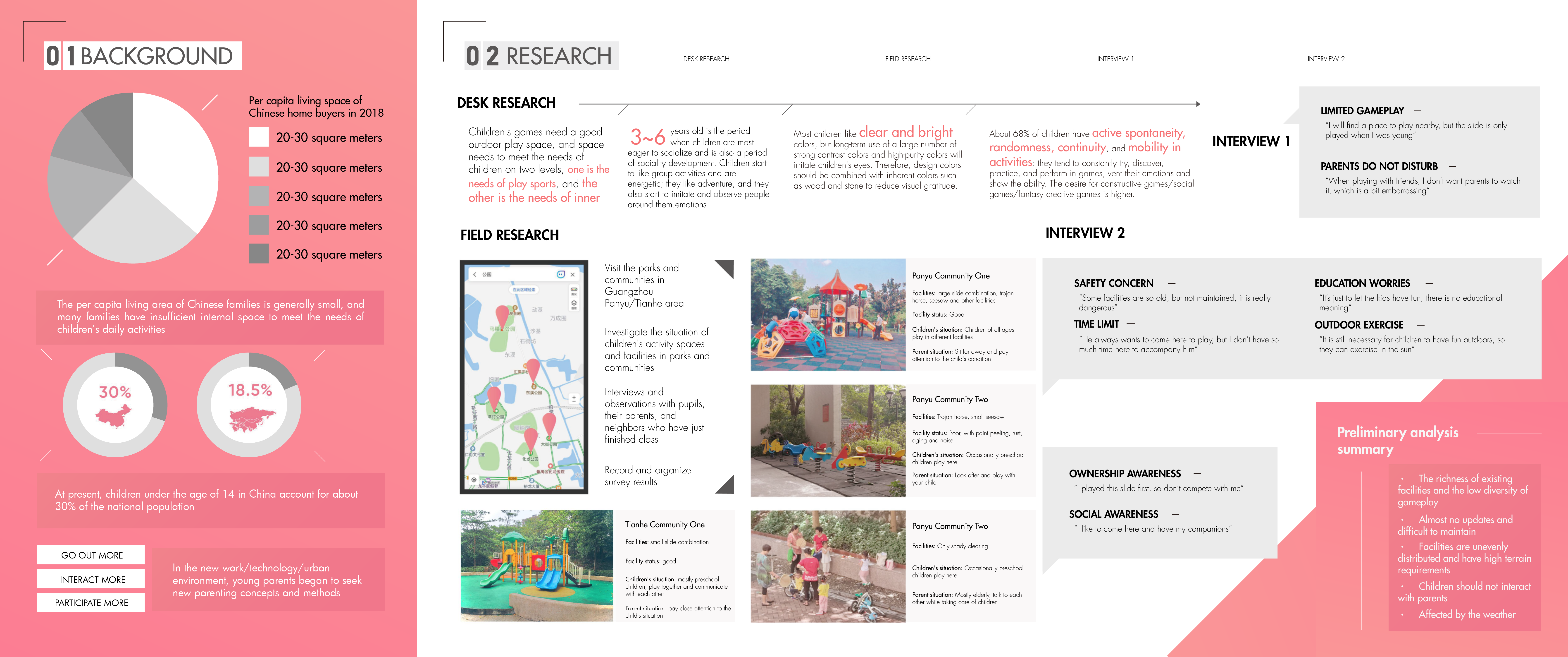
Lorrylaugh began with the loss of accessible play space as cities become denser. When children have fewer places to play, they also have fewer opportunities for movement, exploration and social interaction that support their physical and emotional development.
I proposed a playground that travels between neighbourhoods to bring varied play closer to families. A themed trailer brings climbing, exploration and stories to different locations, with smaller play pieces extending the experience outside.
What a playground needs beyond equipment
Field observations in Guangzhou's Panyu and Tianhe communities and parks, together with interviews, revealed problems beyond a lack of equipment. Some facilities offered only a narrow range of activities; others were poorly maintained, unevenly distributed or difficult to use in bad weather. Parents also had to balance supervision with limited time to accompany their children.
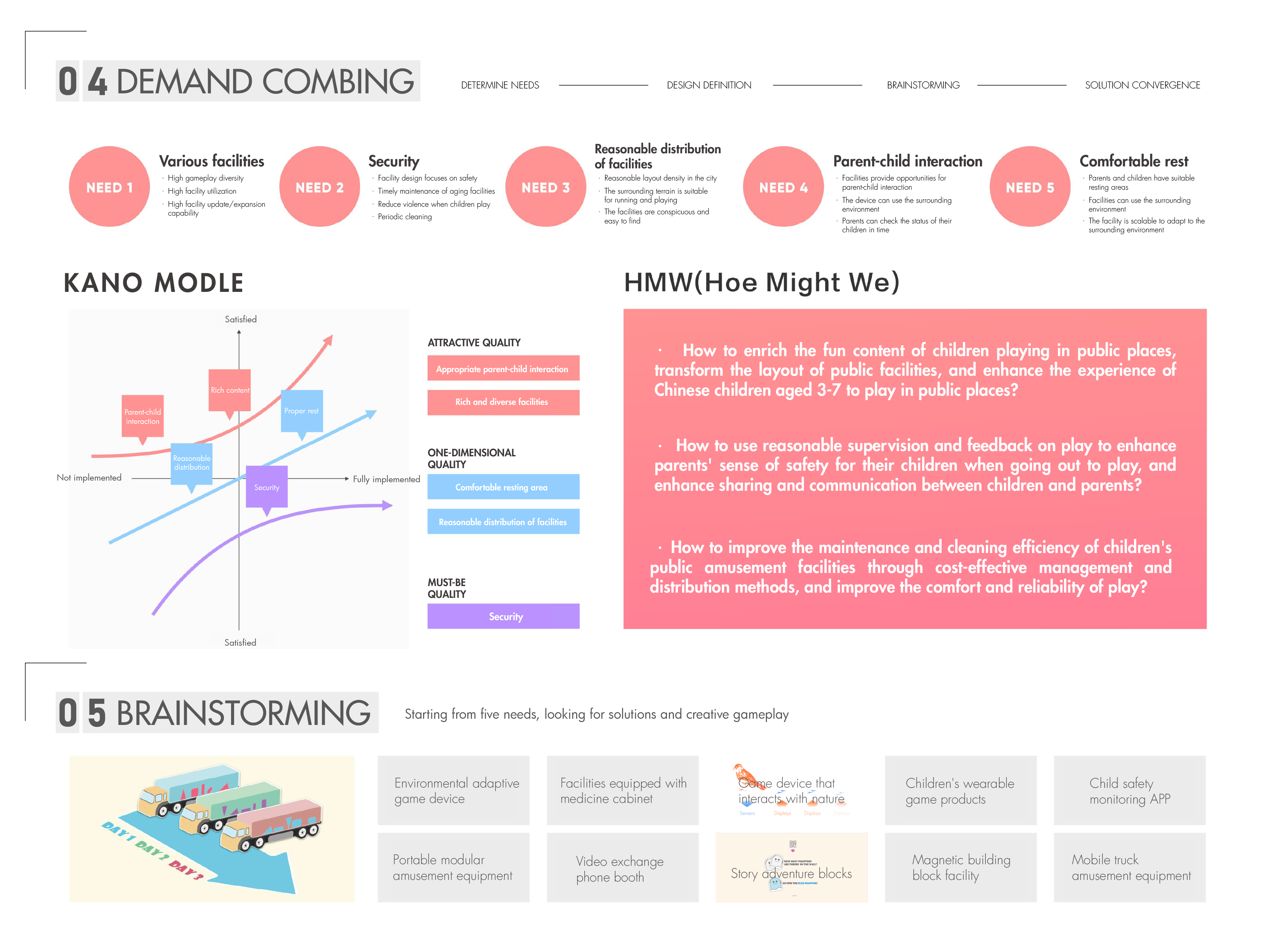
I organised these findings around variety, safety, access, parent-child interaction and a comfortable place to rest. The needs analysis helped separate basic requirements from opportunities to make play more engaging. This led me to explore several directions, including modular equipment, nature-based play and a mobile playground.
A trailer that can change its world
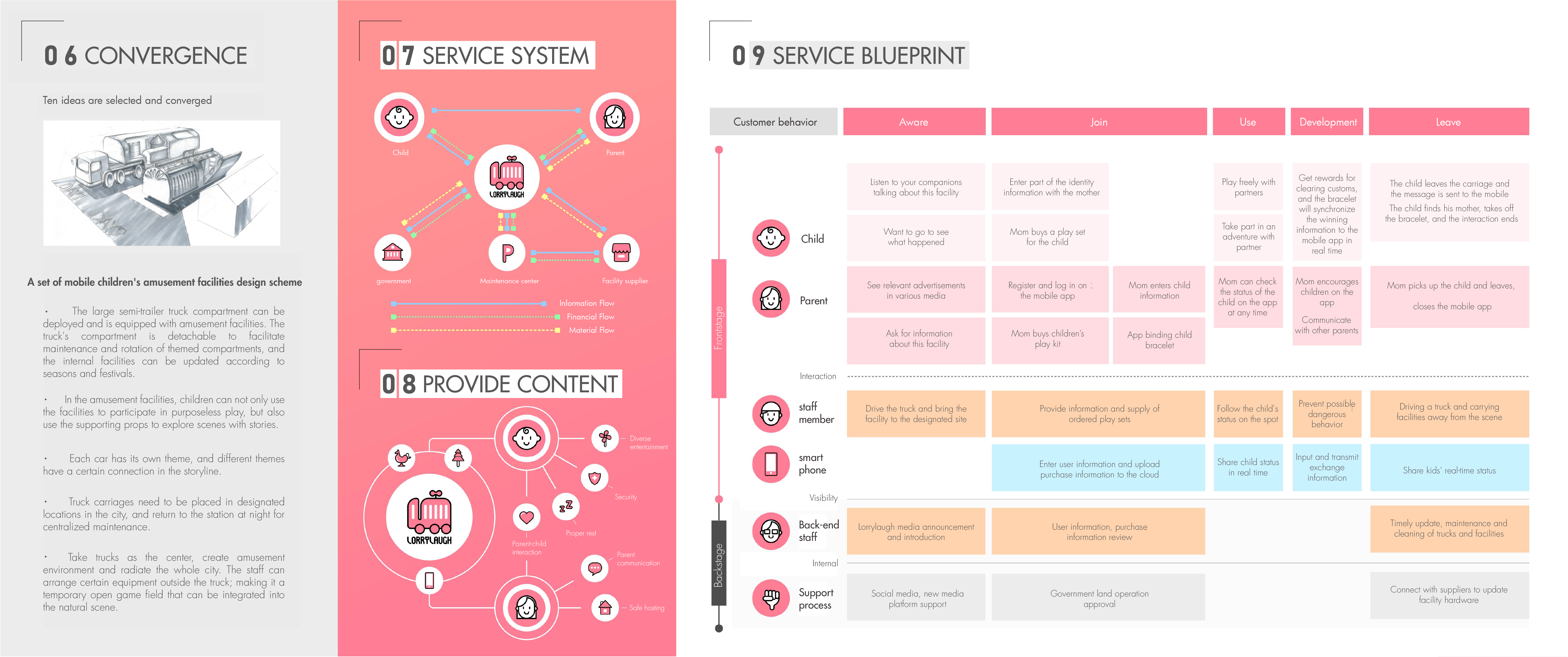
I developed the mobile idea around a detachable themed trailer. Detaching the play space from the vehicle would allow different themes to rotate and return for centralised maintenance. The proposed service travels to designated locations during the day and returns to a base at night, connecting access, upkeep and changing content in one system.
I mapped the experience from discovering and joining the service to playing and leaving. The blueprint connects families, on-site staff and the maintenance team. I proposed linking the child's wristband to the app so parents could check their child's status and rewards, with a notification when the child leaves the carriage.
Developing the space through a model
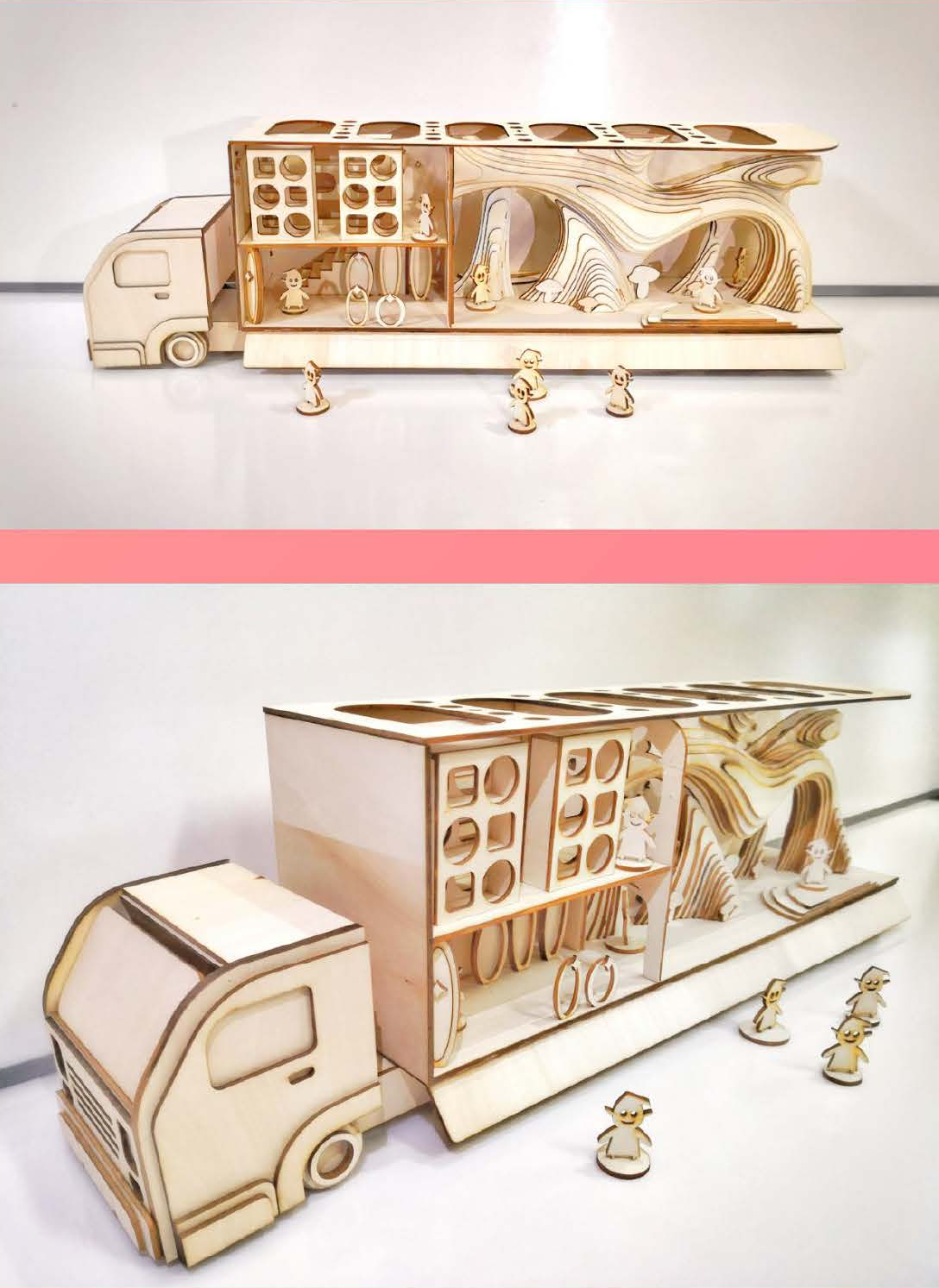
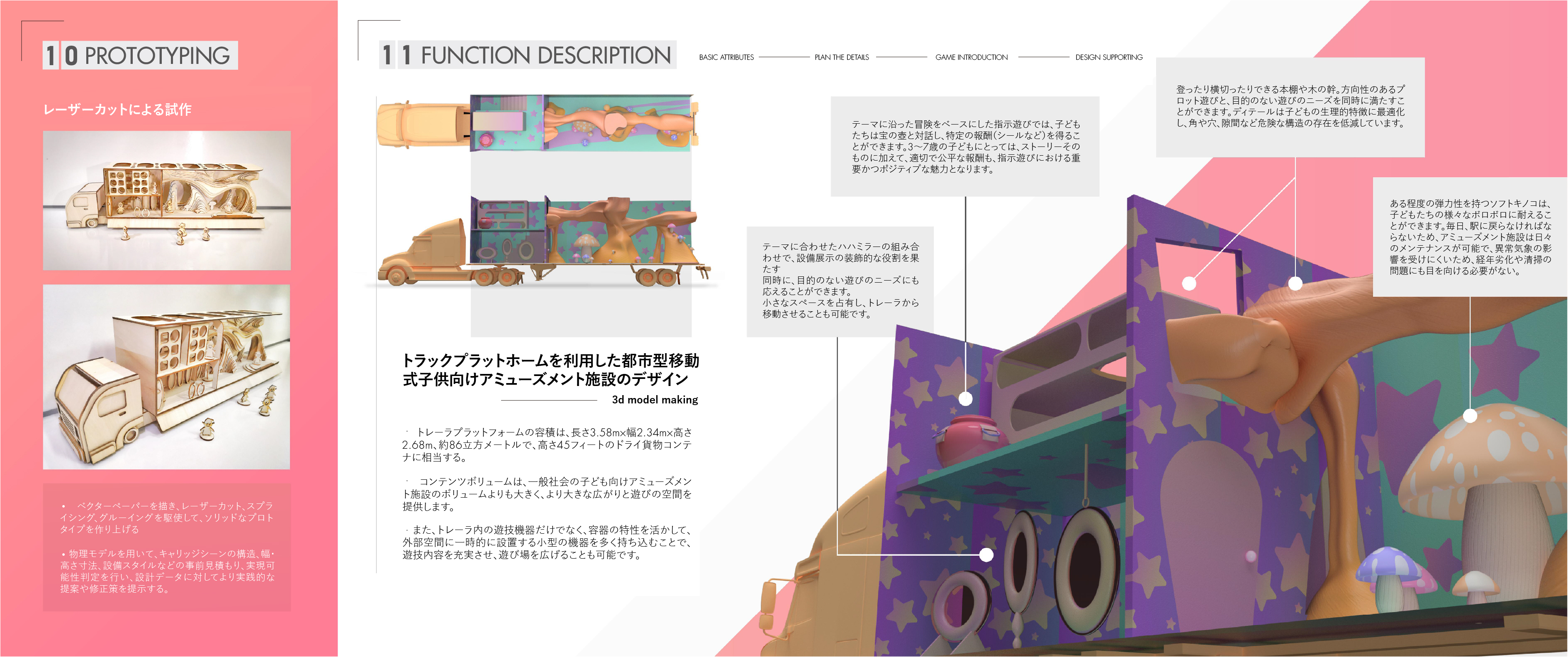
I used a laser-cut physical model to work through the trailer's proportions, internal structure and play elements. Assembling the model made it possible to judge how the different forms occupied the narrow space and take those observations back into the design.
A story to follow, room to explore
The forest theme combines oversized trees, mushrooms, openings and climbing forms within the trailer. I wanted it to support both a guided story and free exploration, so children could find their own way through the same setting. Smaller movable pieces extend play outside and let the temporary playground respond to its surroundings.
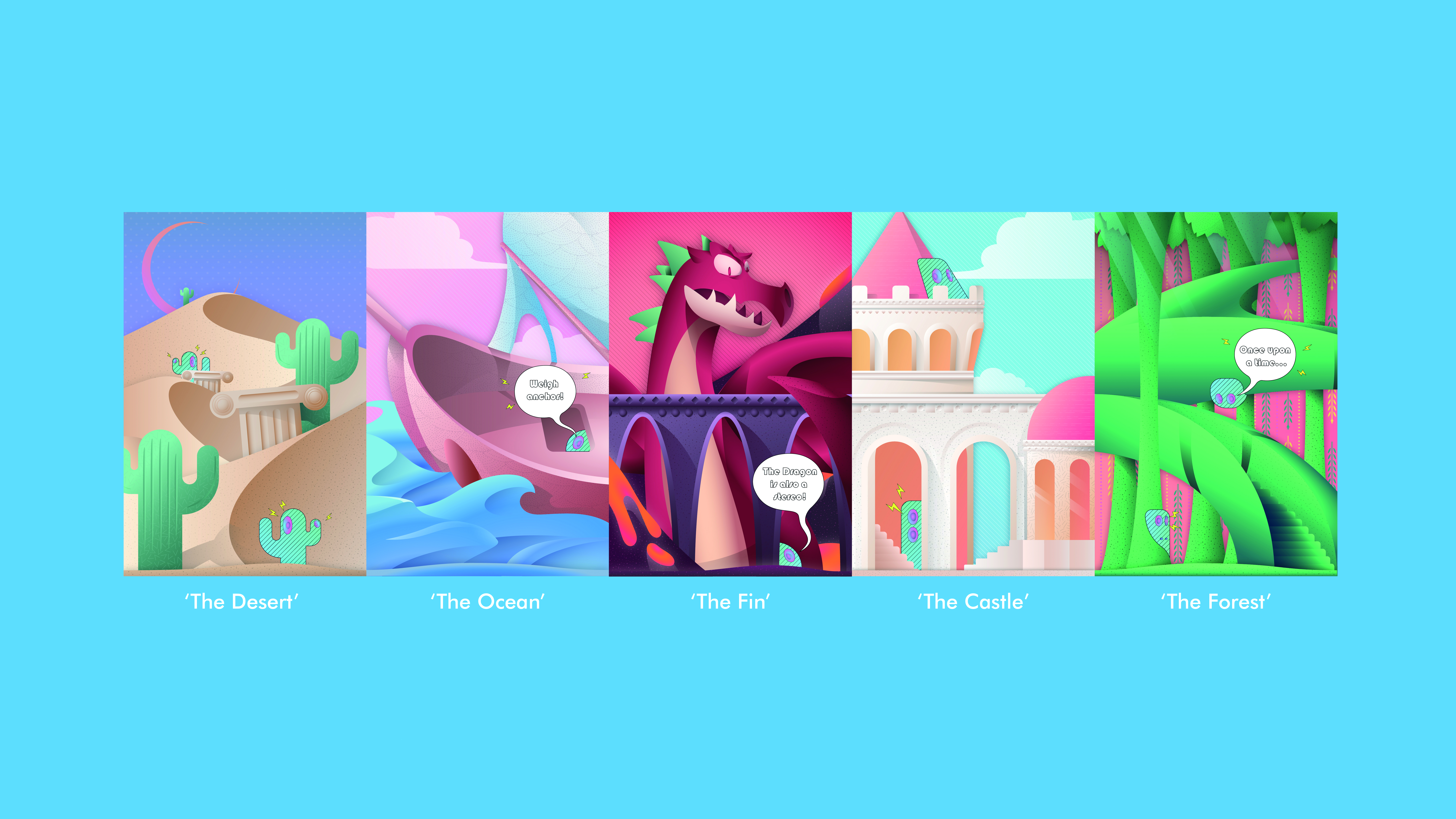
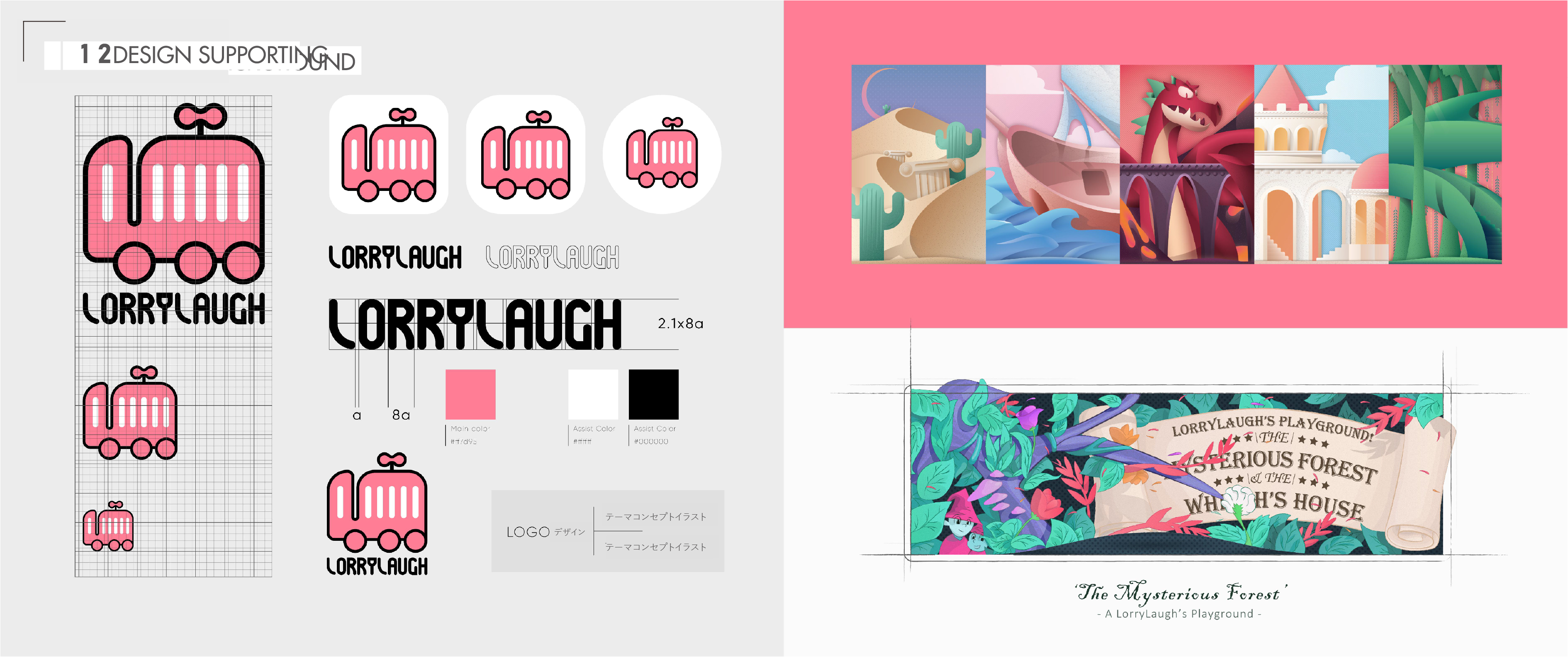
Desert, ocean, fire and castle worlds were also explored. The forest was developed in greater detail, while the themes together suggest a series of connected stories that could change between visits.
Recognising the travelling playground
The pink vehicle-shaped symbol and rounded Lorrylaugh wordmark make the mobile format part of the identity. Each illustrated world has its own scenery while belonging to the same service, helping the changing themes remain recognisable.
Developed under the guidance of Professor Stephen Chininis, Georgia Institute of Technology.