Bringing the artwork onto the façade
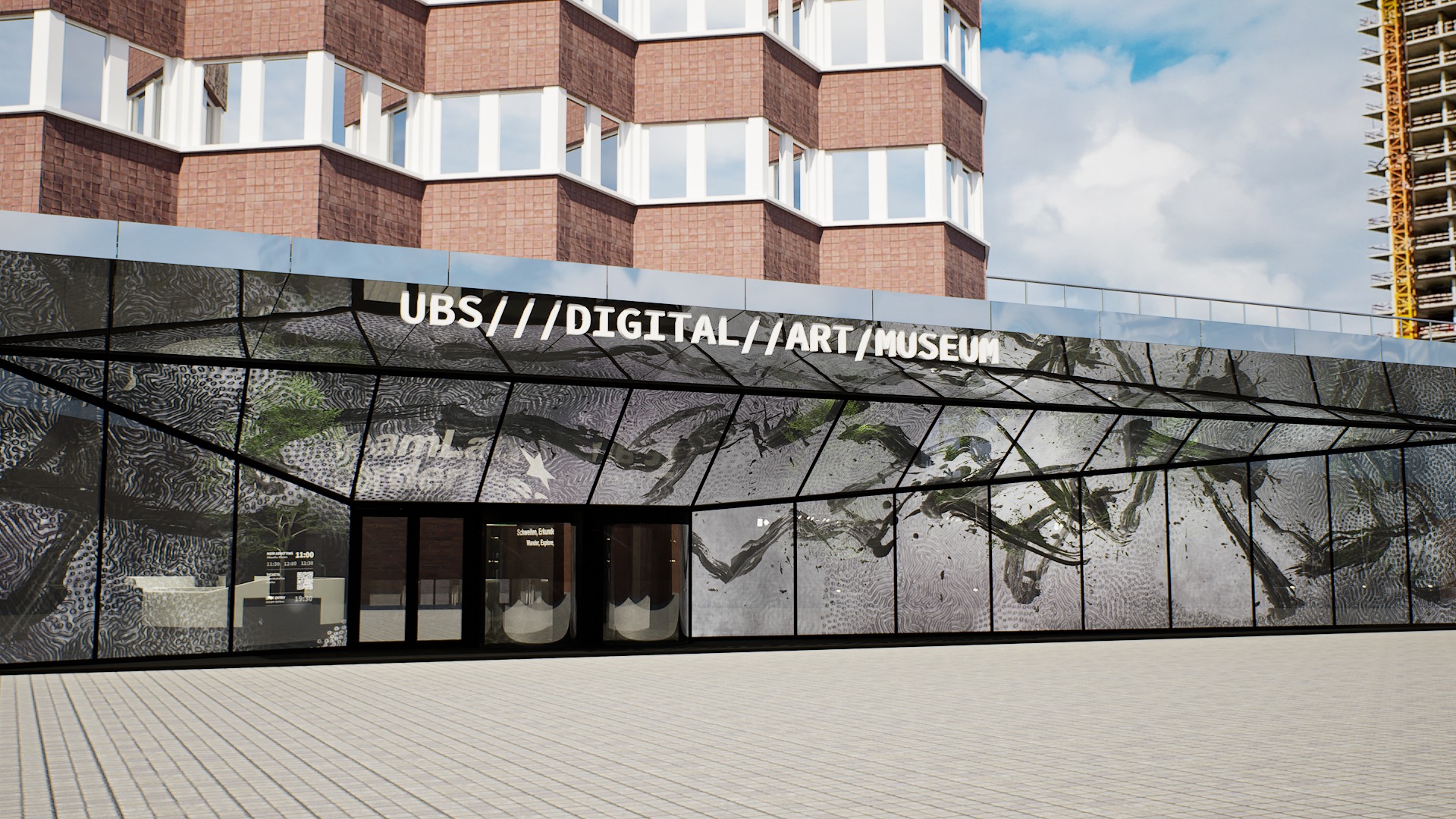
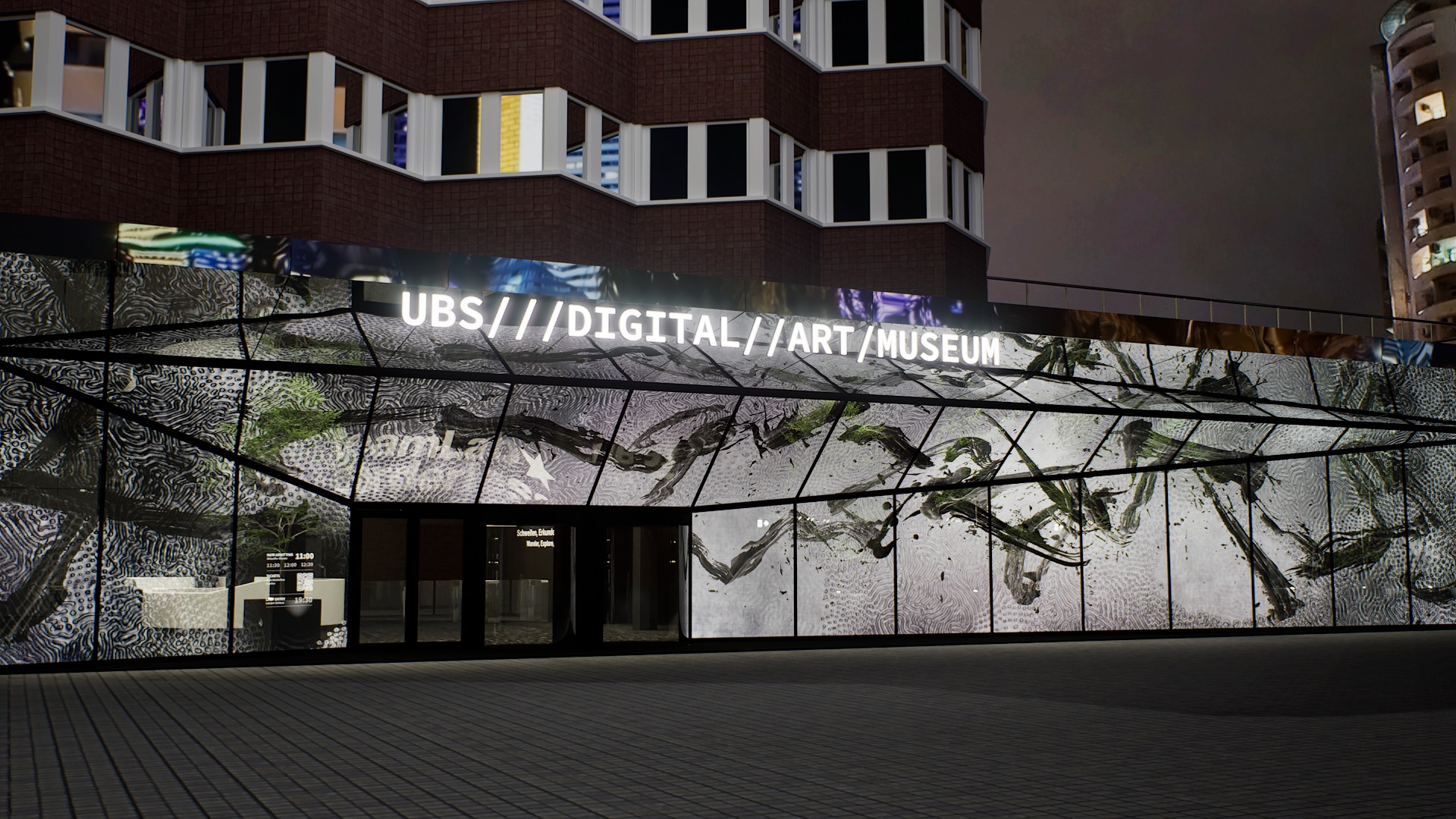
For teamLab Borderless Hamburg at UBS Digital Art Museum, I designed the visual appearance of the signage and developed its relationship with the façade. I used transparent LED to bring the artwork across the building’s exterior, with the signs forming part of the same composition.
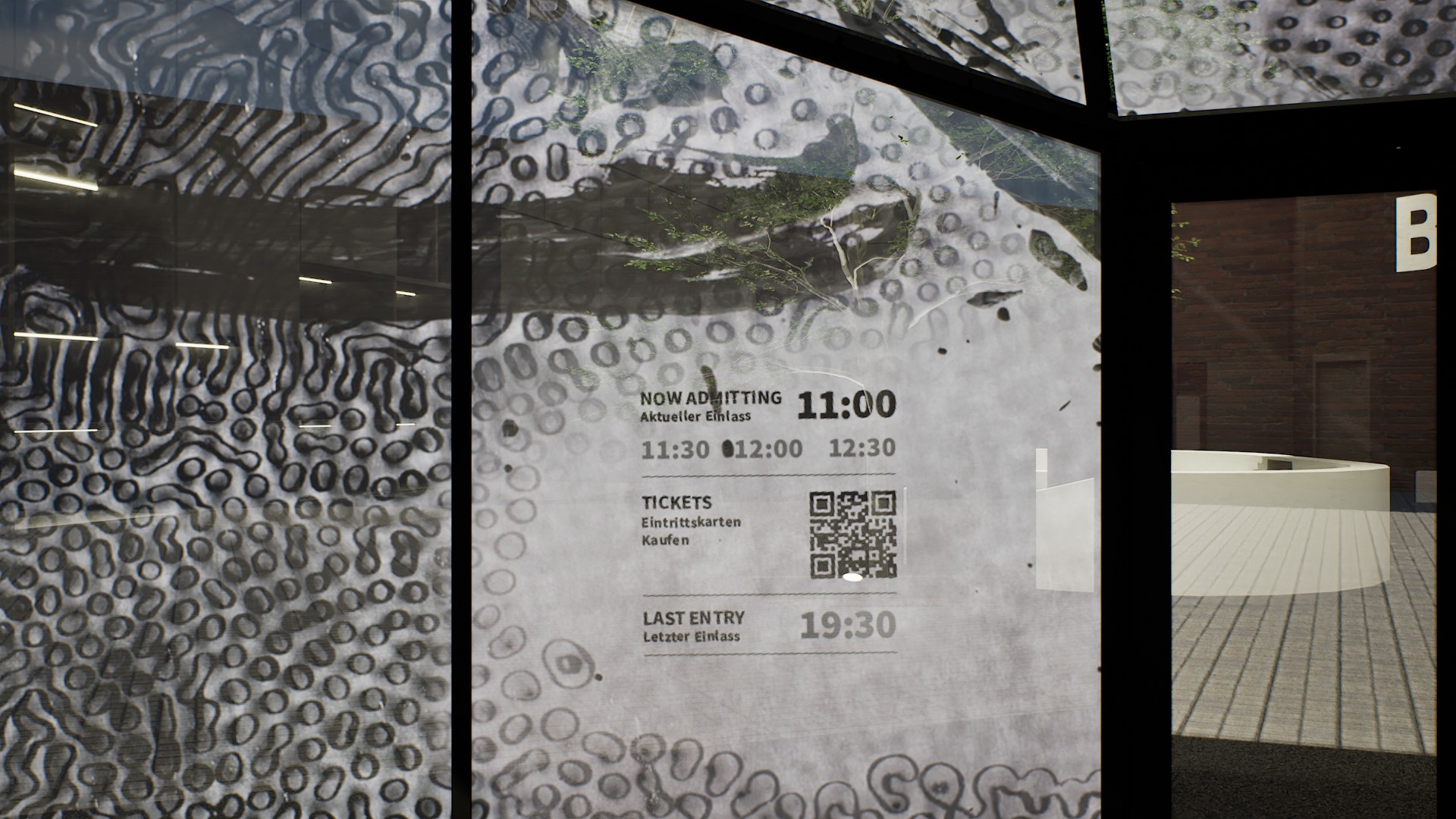
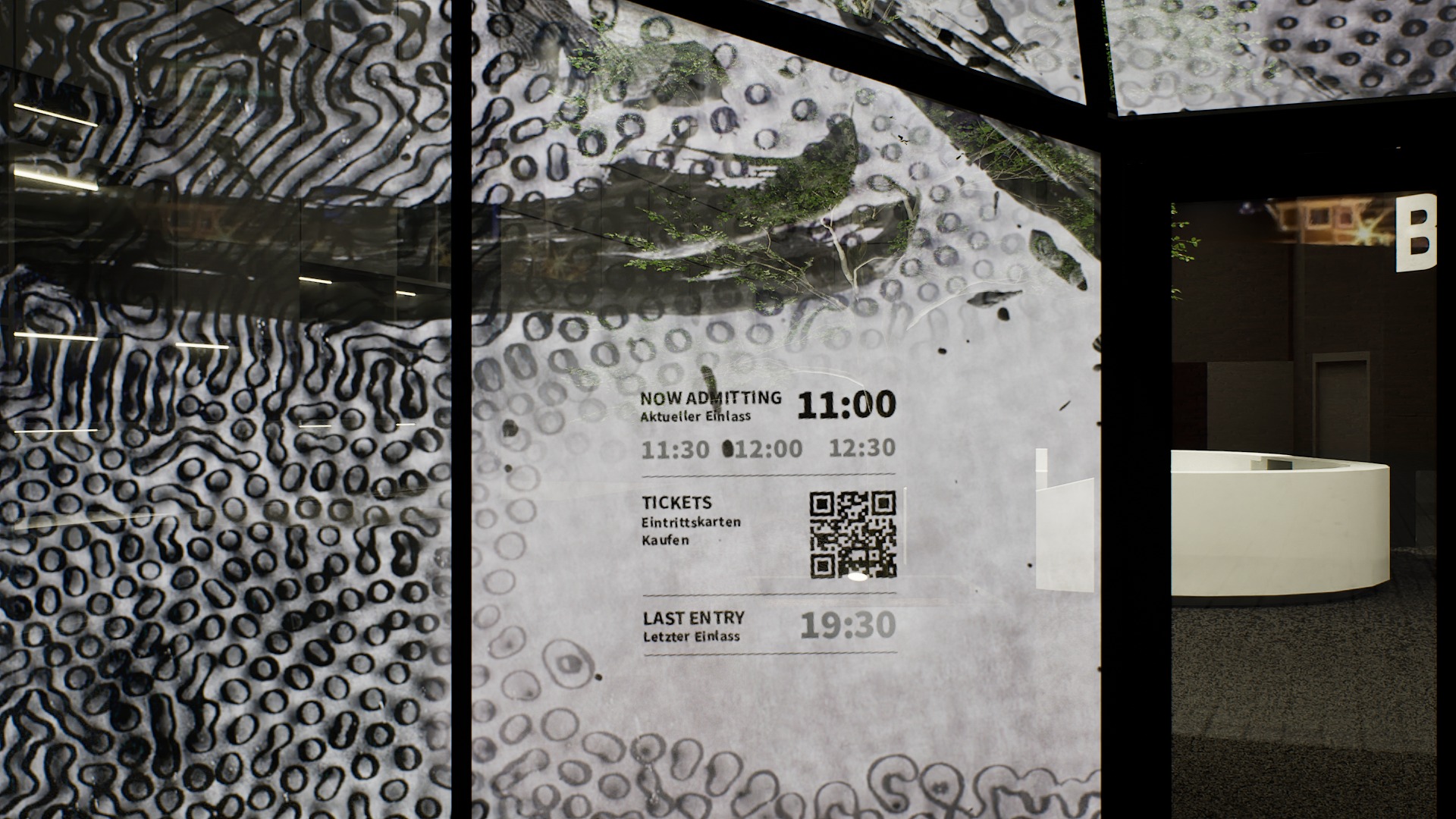
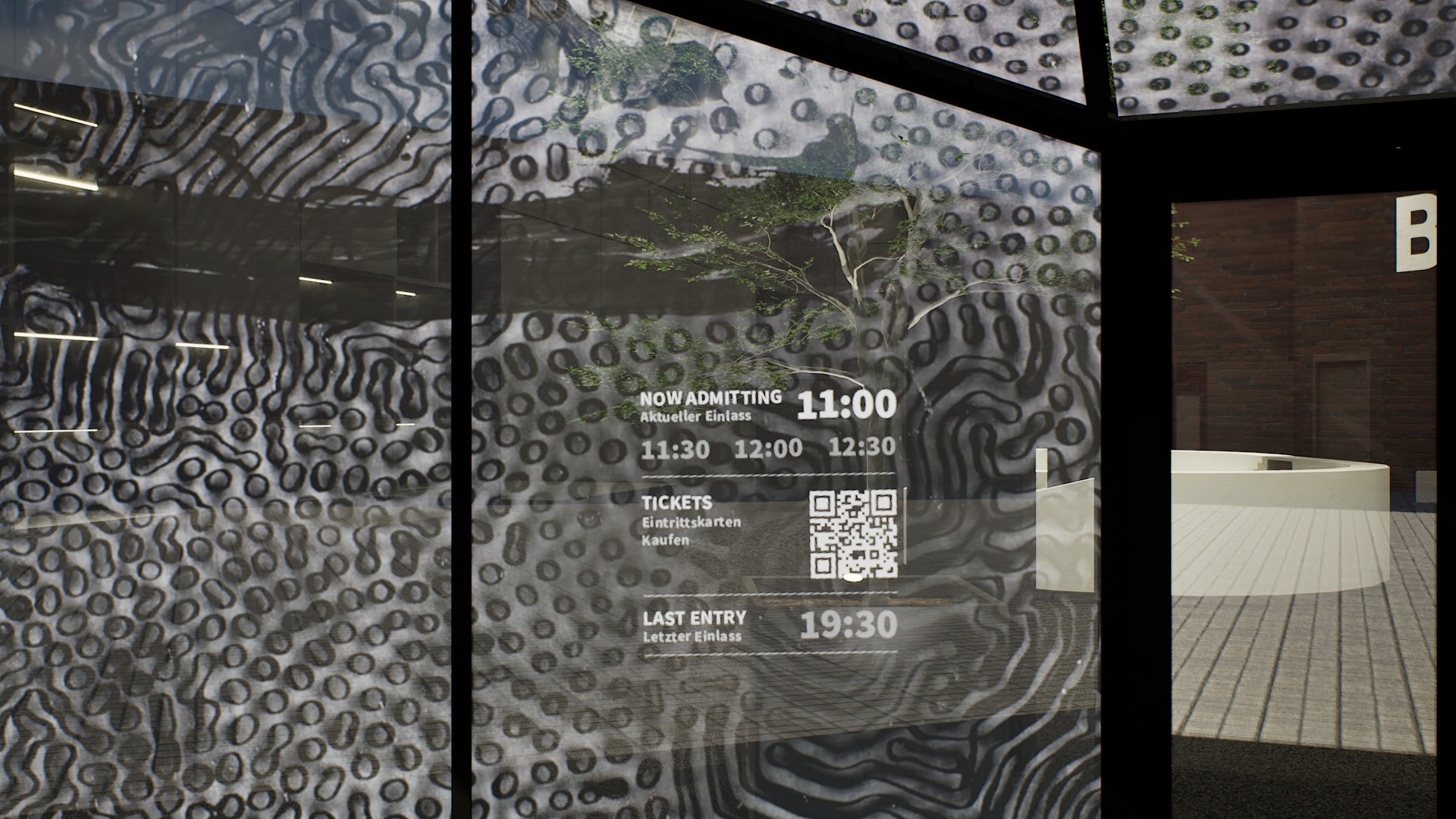
I developed the proposal in CG, studying how the transparency and sign placement would read from the street. The views shown here explore the design in daylight and at night.
A view through the image
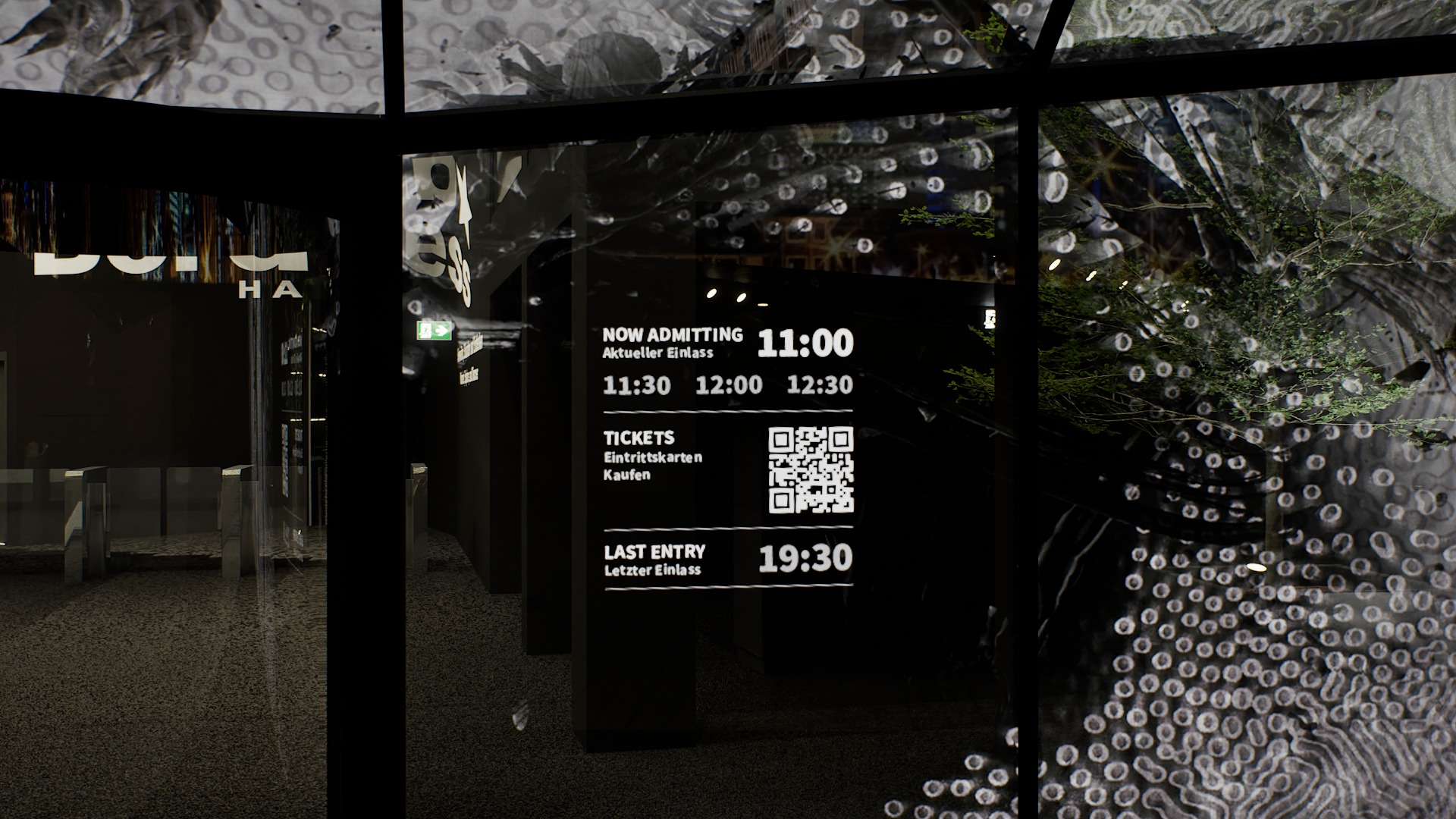
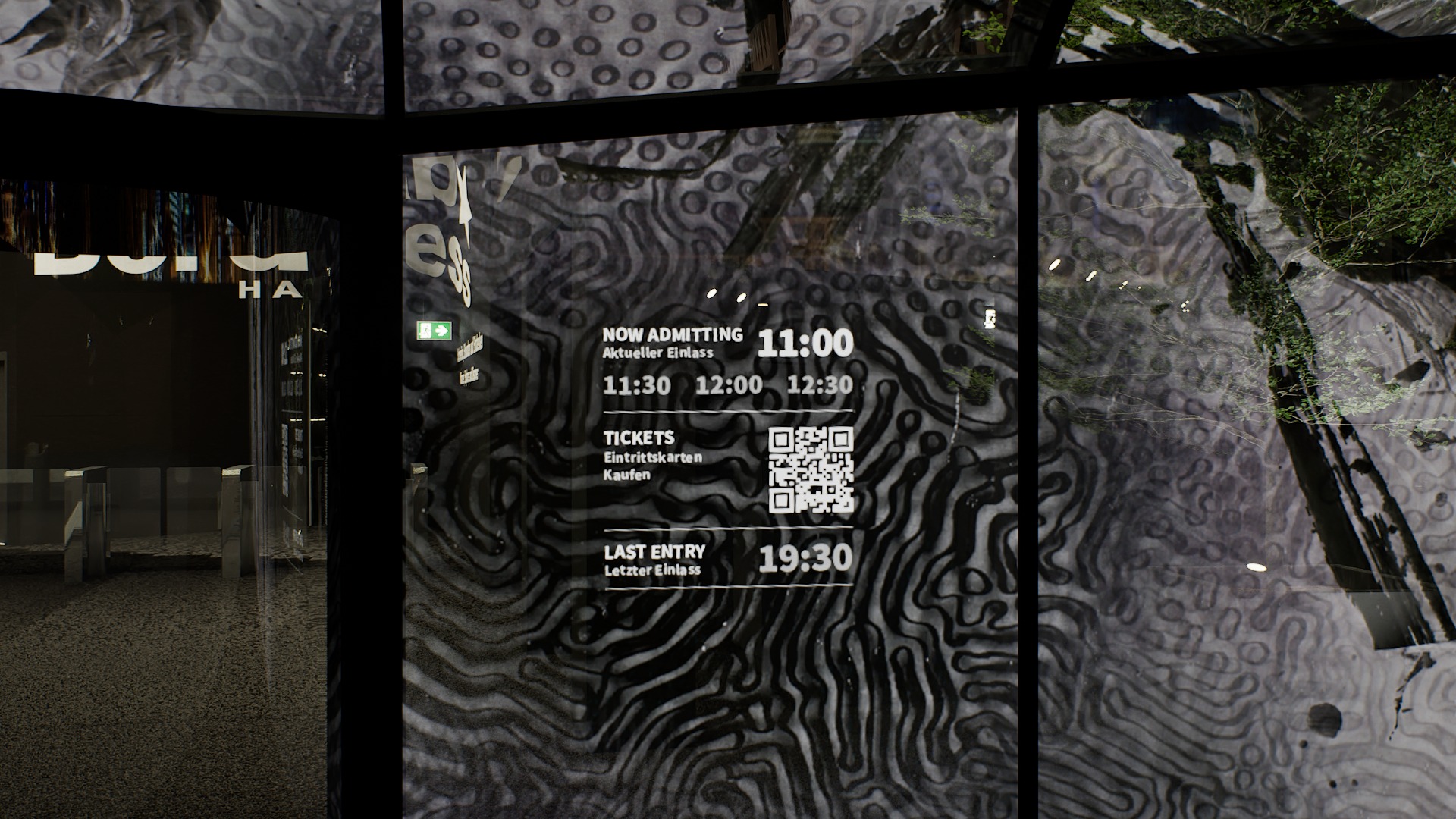
I wanted the façade to have a hazy depth, with parts of the space behind it still visible through the artwork. Transparent LED allowed me to explore this overlap: the trees behind the façade could appear through the image, their branches and leaves becoming another layer in the view.
The balance between transparent and opaque areas was central to the design. Denser areas of imagery brought the surface forward; clearer areas drew the eye through to the trees. I used this difference to soften the boundary of the building and give the signage a place within the layered image.
Designing the signs within the image
I developed three sign options and compared placements on the left and right sides of the façade. I considered the text against the artwork and the visible space behind it, checking how clearly the information could be read within the overall composition.
For each placement, I kept the camera and lighting settings consistent across the options. This let me compare their scale and position from the same viewpoints.
Keeping the trees in the view
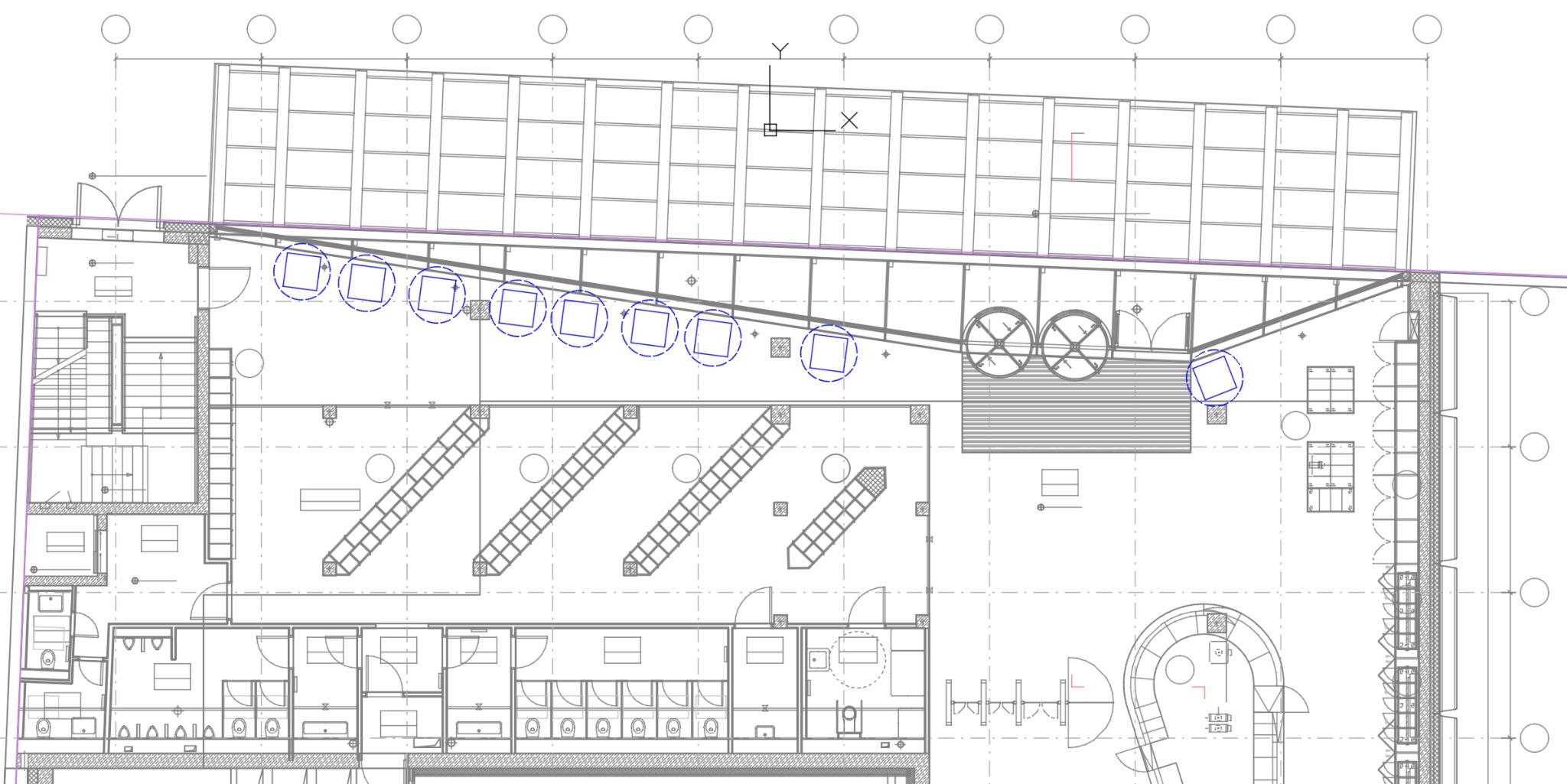
I included the revised planting layout in the CG model to assess the trees behind the façade together with the artwork and signage. I checked the proposal from three camera positions, each at an eye height of 1,600 mm with a 24 mm lens.
Reading the façade by day and night
I rendered each option in daylight and at night to study how the illuminated imagery and signs would sit against the surrounding architecture. The paired views helped me judge the balance between the façade’s surface and the depth visible behind it under both lighting conditions.
Camera 1 provided a common view for both placements. Cameras 2 and 3 gave additional views of the left and right sides.
Comparing the proposal in CG
I prepared 24 CG views across the three sign options, comparing left and right placements in daylight and at night.
Project by teamLab. My contribution: signage and façade visual design, explored through CG simulation and visual evaluation.