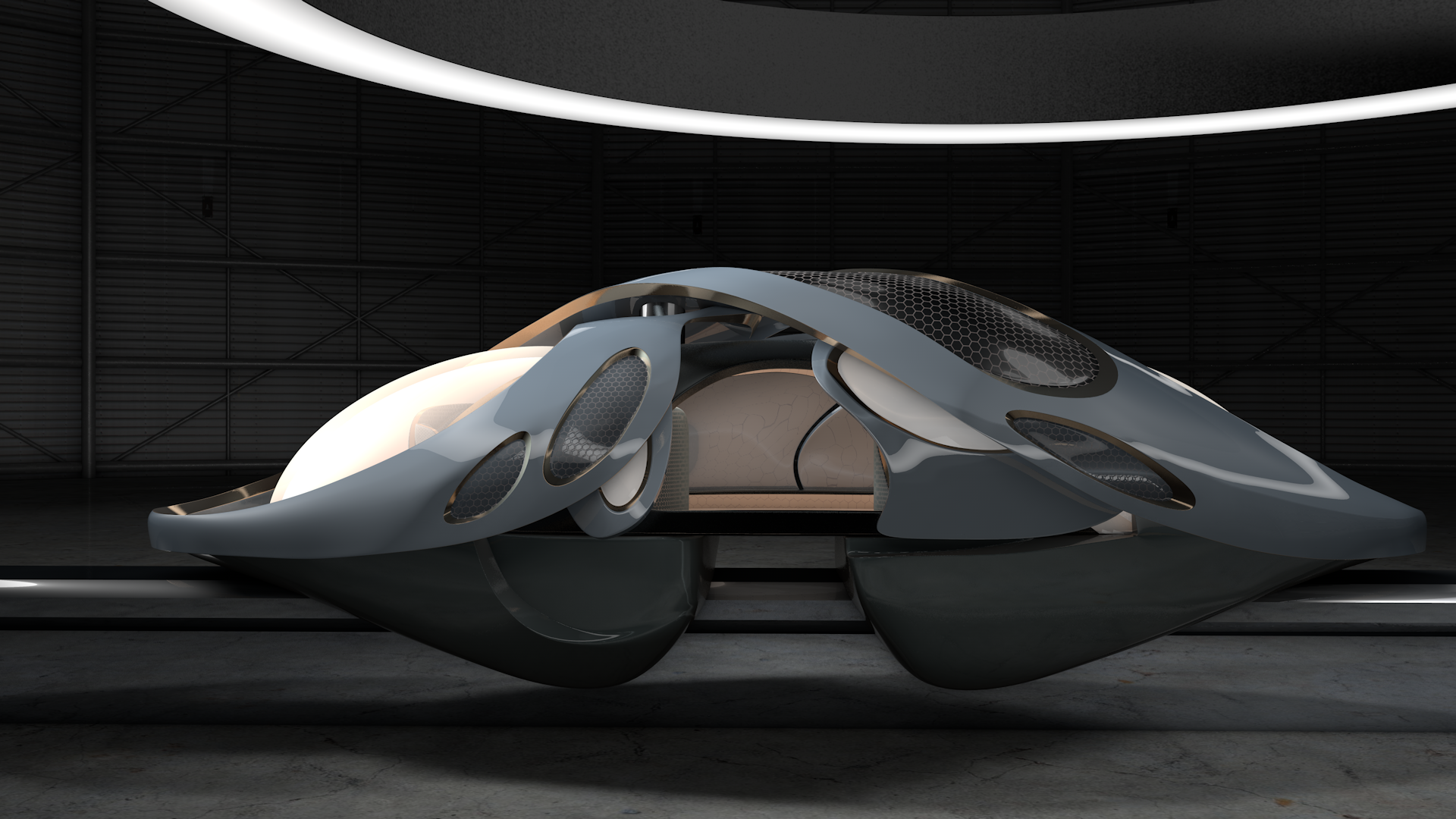
A commute planned in advance
Thunnus responds to a pattern of urbanization in which more people work in major cities while living in surrounding satellite towns. Business visits between neighbouring cities add another reason for frequent intercity travel. I considered these everyday journeys as the starting point for the project.
I proposed a pre-booked rail carriage for both regular commuting and business visits. Transfers, uncertain boarding and repeated stops can make an already tightly scheduled day feel more demanding. I wanted to make the journey more predictable, with a place to sit, rest or work.
Four passengers, selected stops
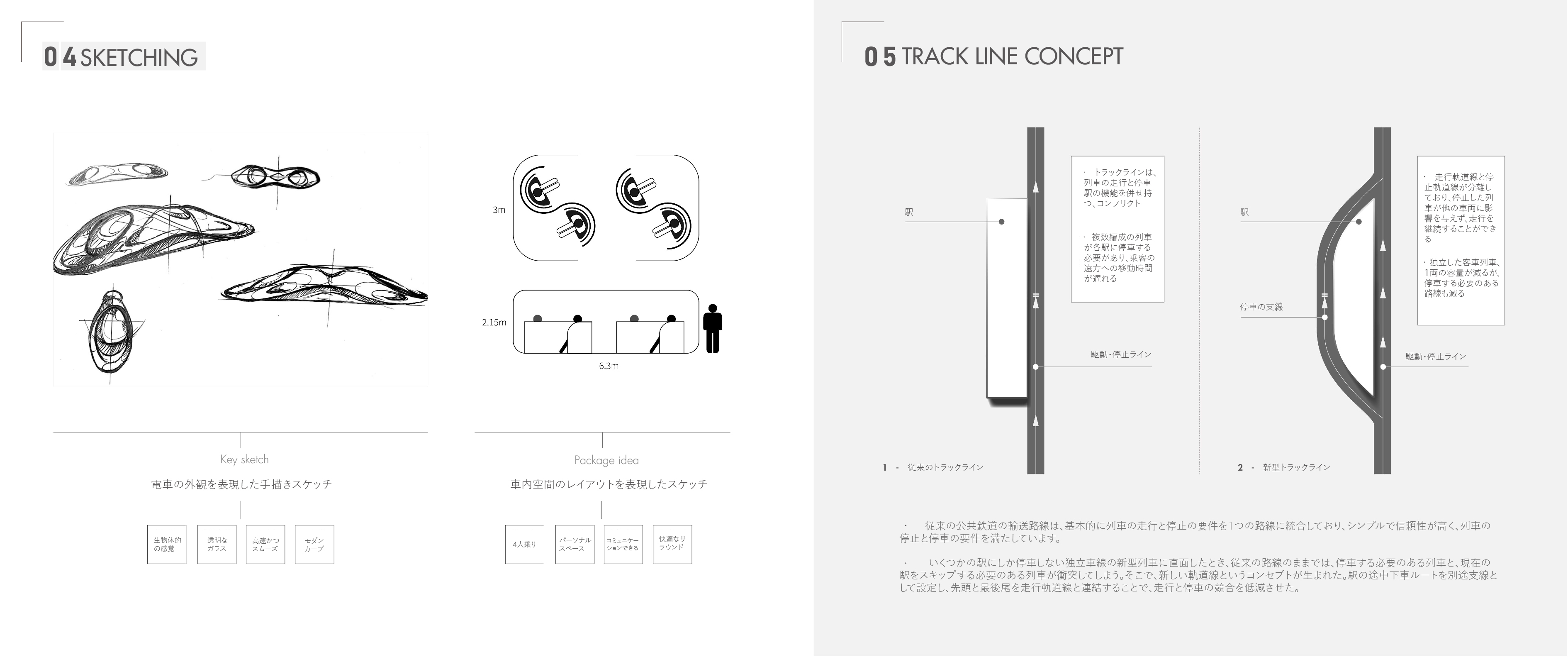
I developed the service around an independent four-seat carriage, travelling to the destinations of a small group. This trades the capacity of a large carriage for a more selective stopping pattern. It also changes the track: I proposed a station branch that leaves and rejoins the main line, separating a stopping carriage from vehicles passing through.
A more open carriage
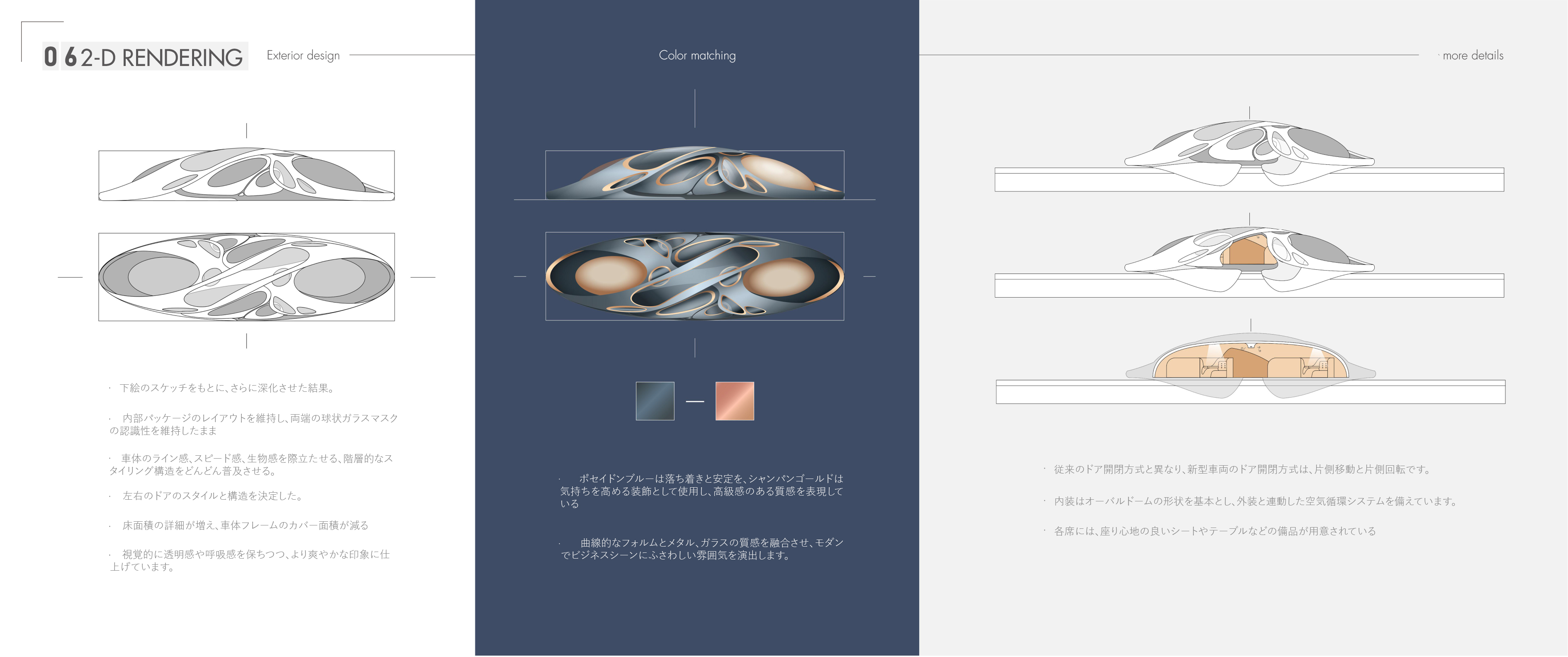
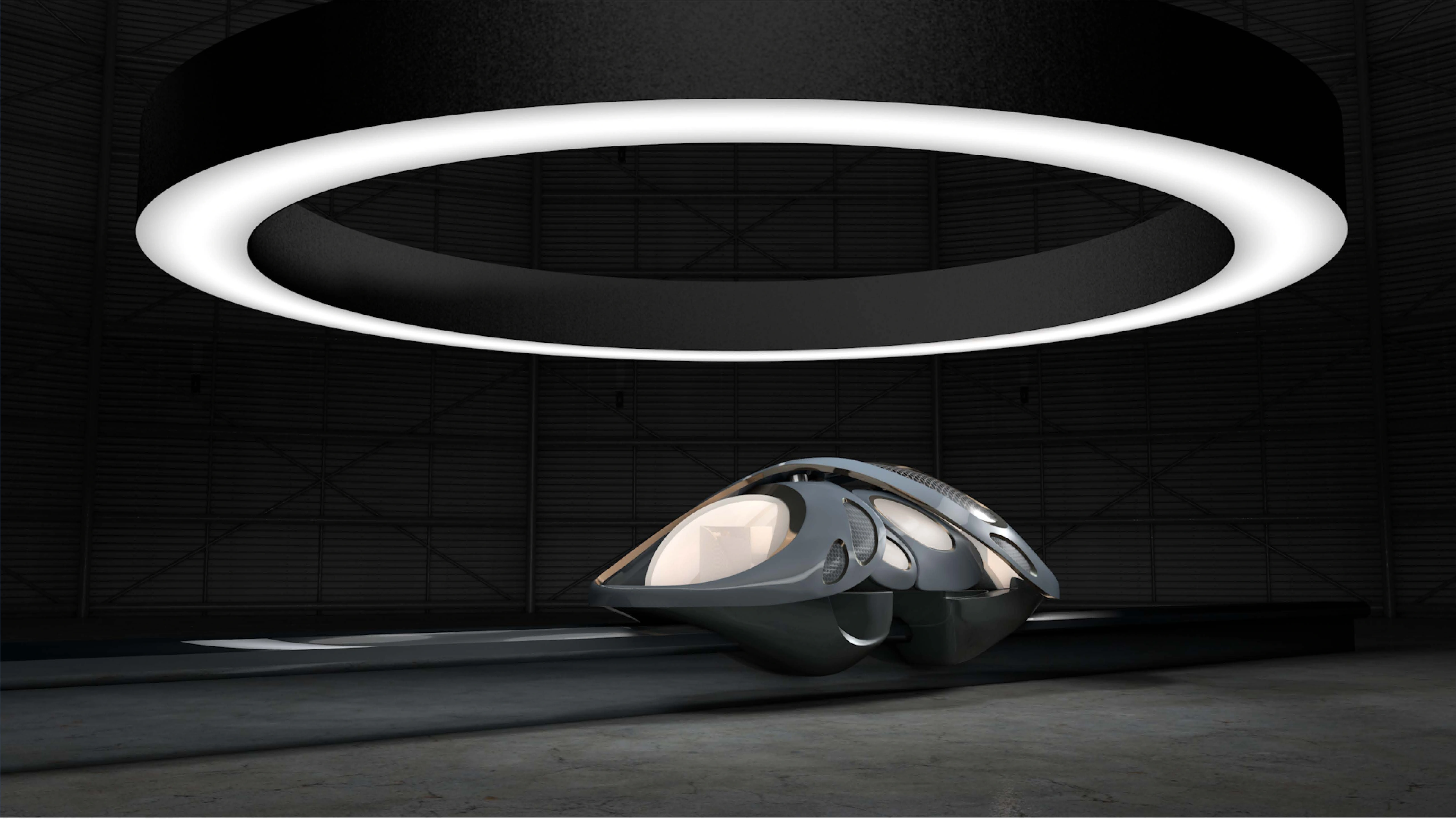
I developed the shell through sketches and two-dimensional studies, keeping large glazed ends and reducing the visual weight of the frame. Deep blue and champagne gold give the curved surfaces a calm, business-travel character. I then modelled the proposal in Cinema 4D, including an air-exchange concept across the shell to address the feeling of a stuffy carriage.
From finding a seat to settling in
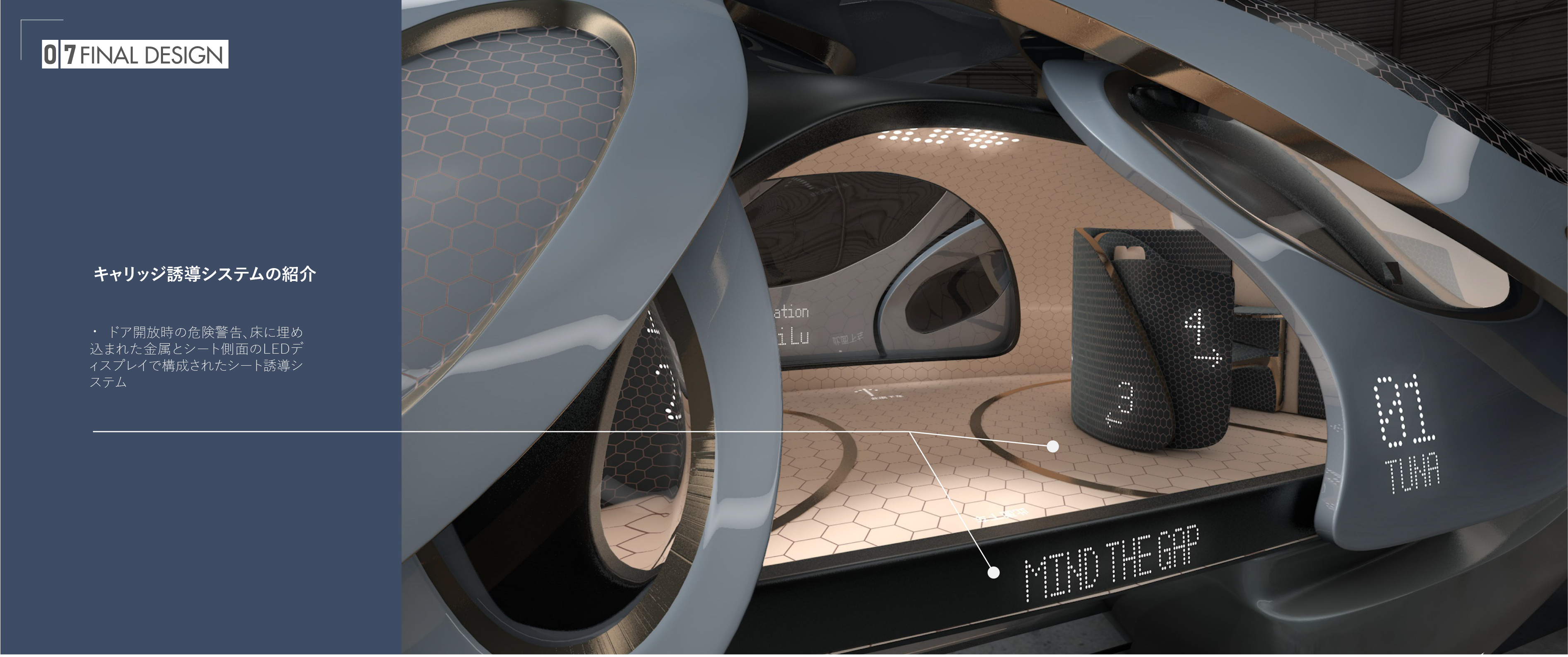
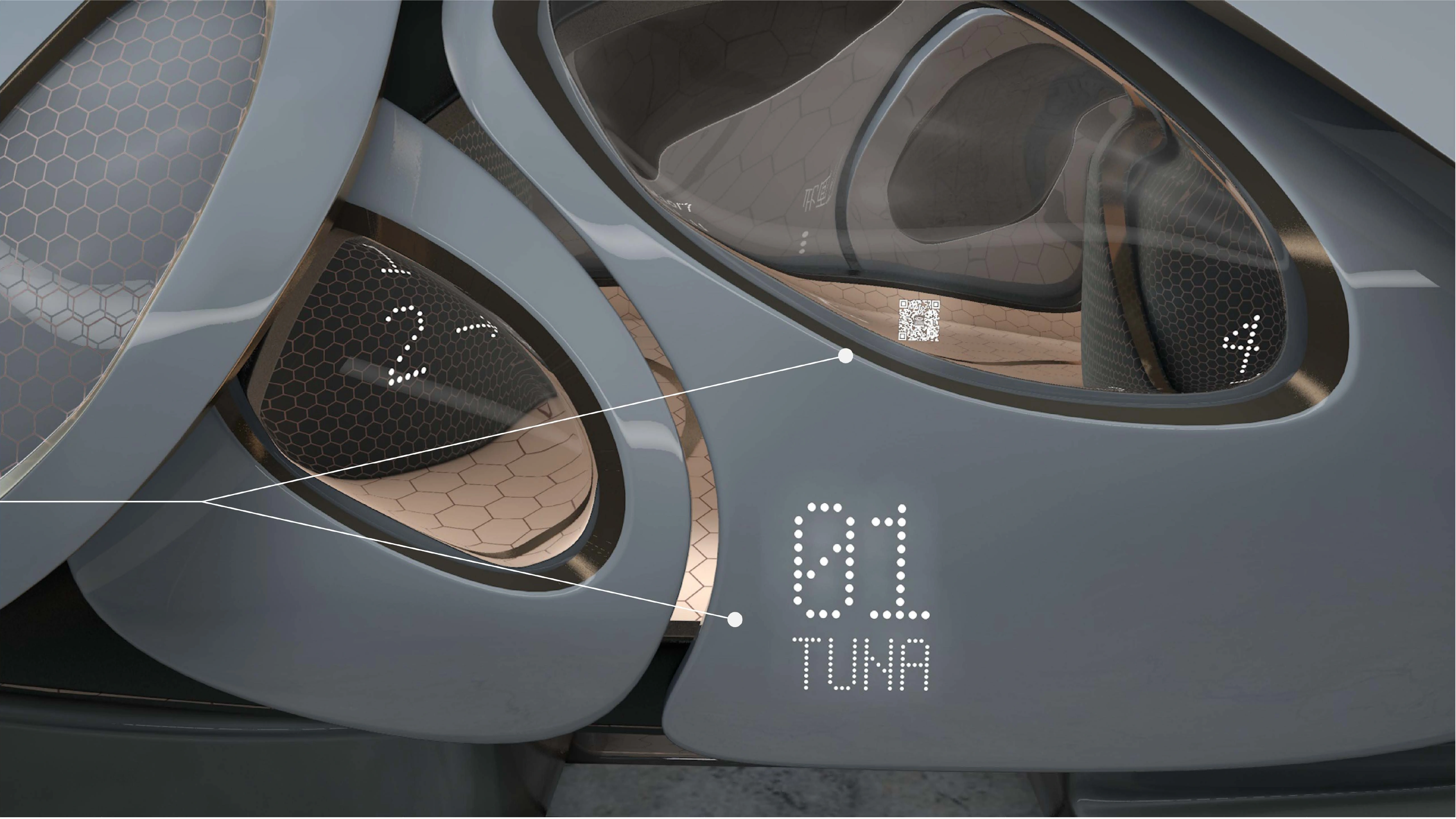
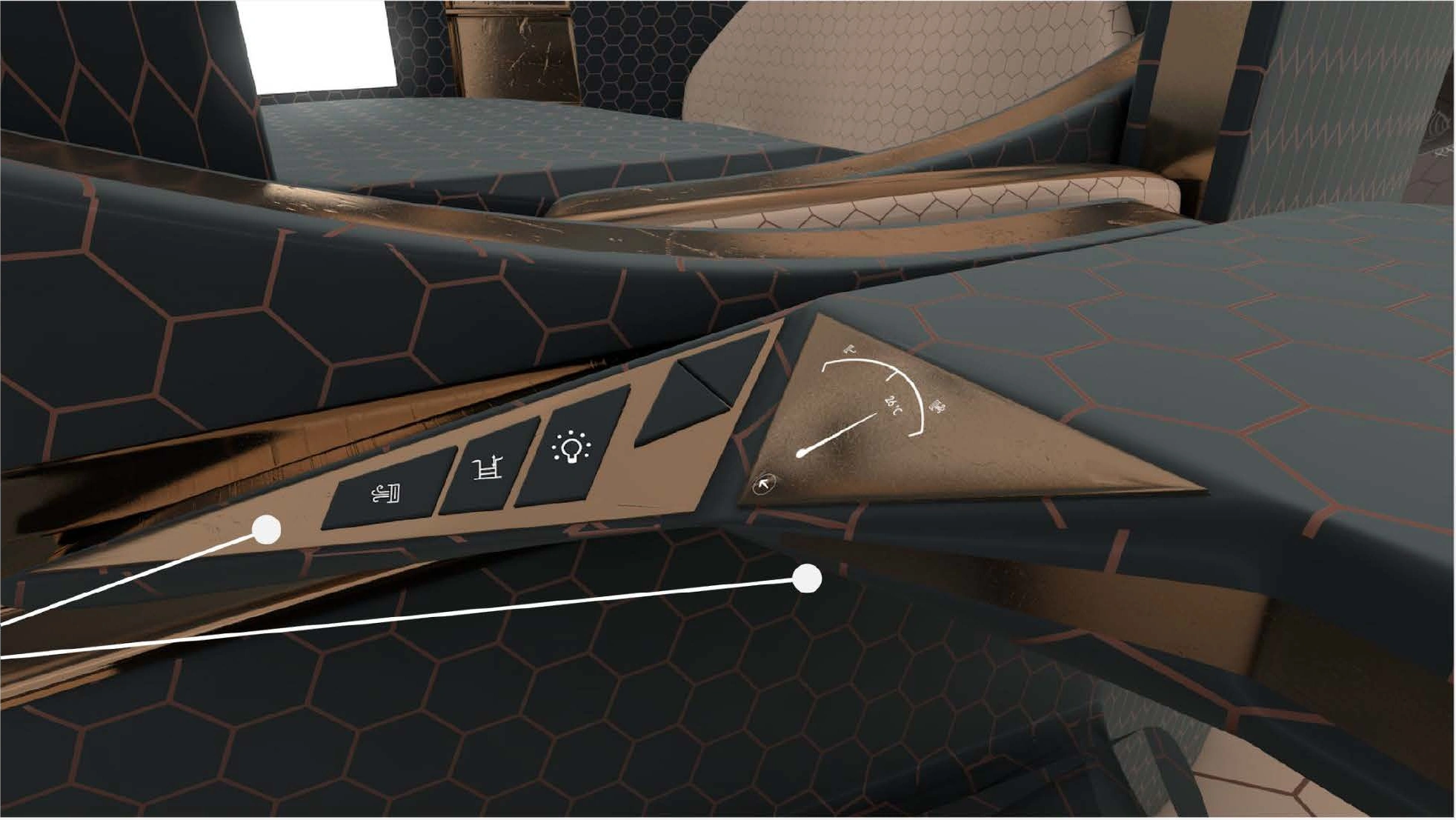
The carriage carries its own guidance: exterior identification, a warning at the threshold, floor lines and illuminated seat numbers. At each seat, I placed buttons and a small display on the table rail. The controls follow a select-adjust-return sequence; in the default state, the arrow buttons move the table. I also proposed an illustrated introduction to these controls for the app.
Space to be alone or talk
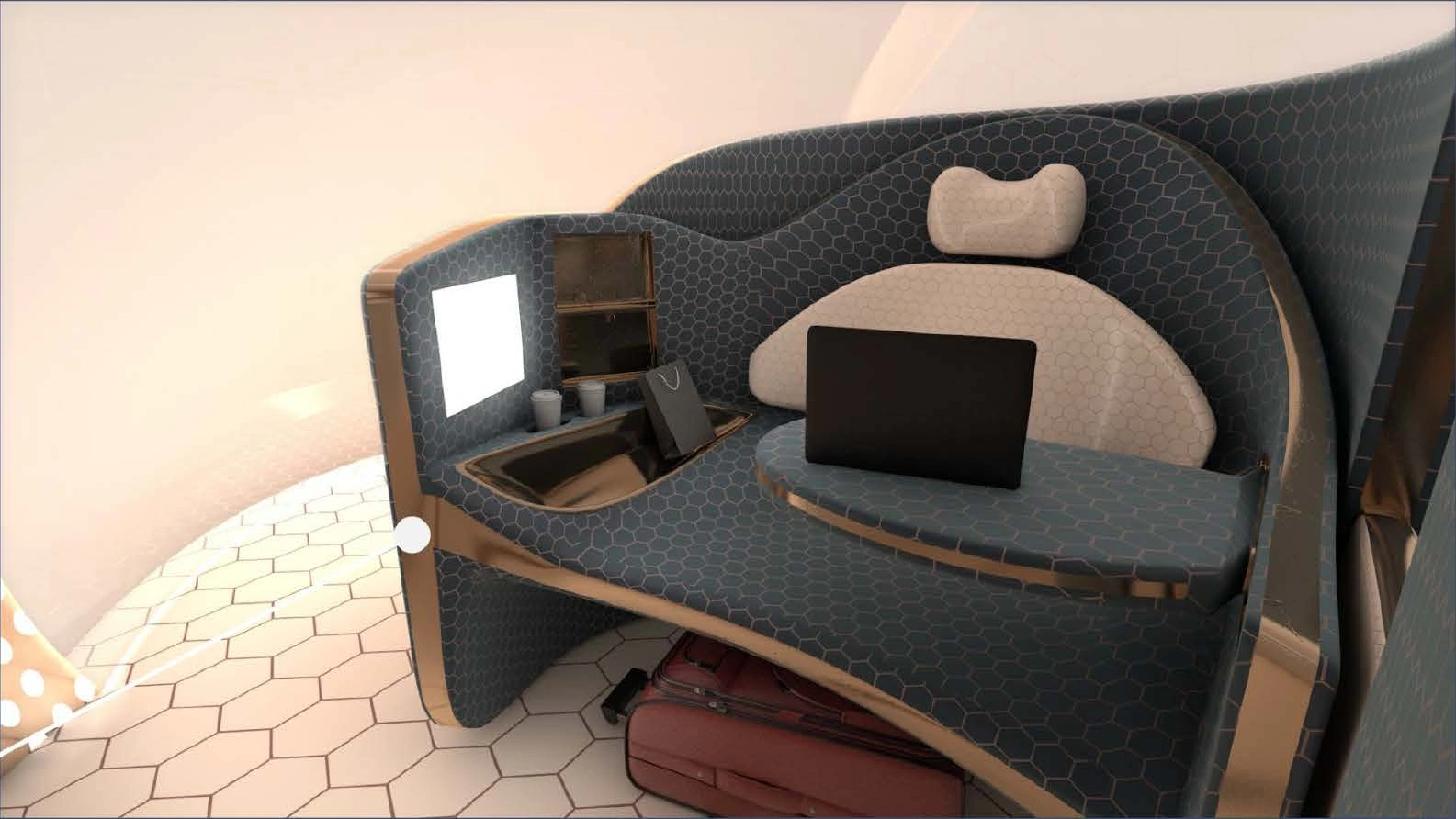
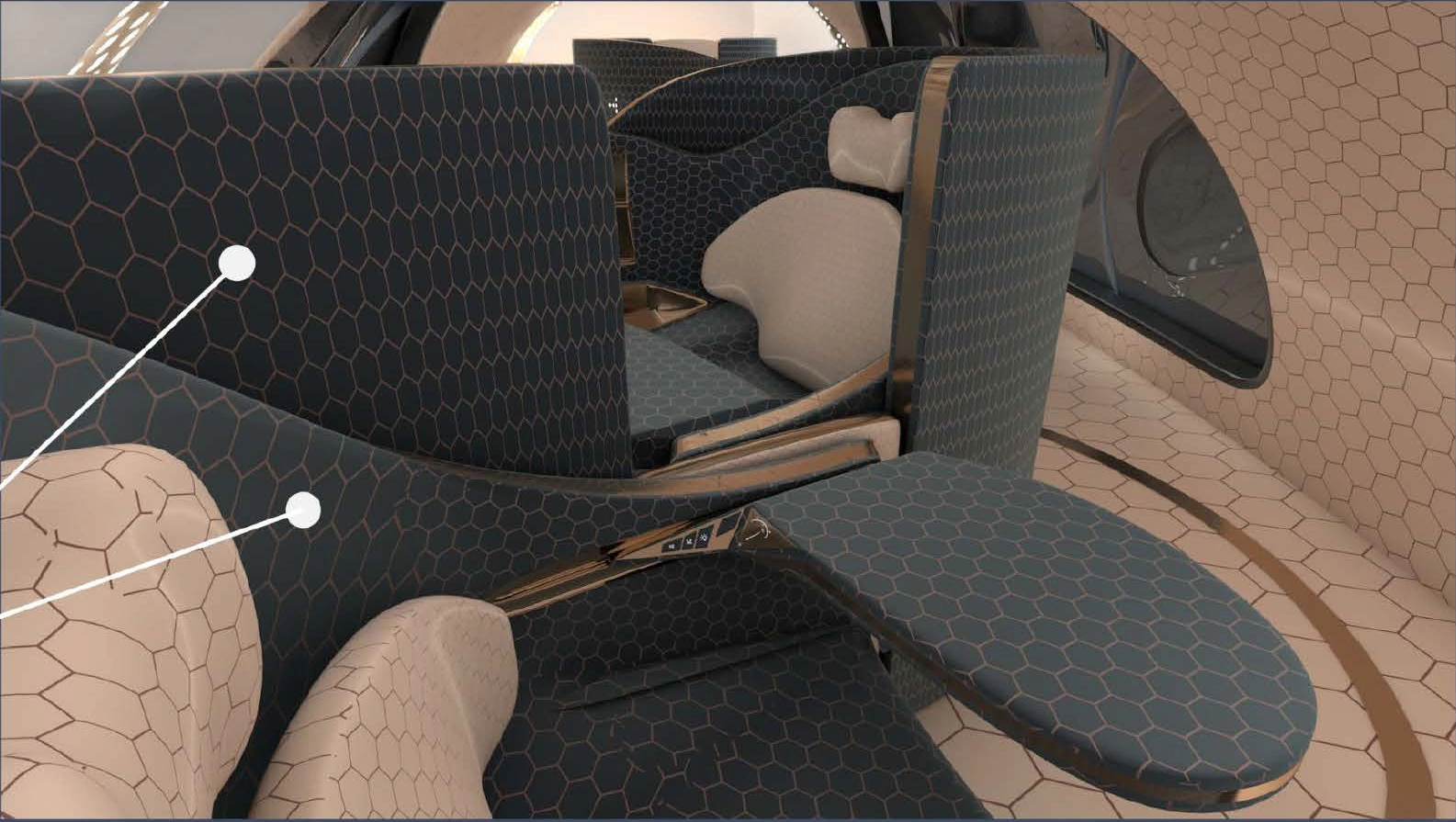
Inside, I arranged the seats in two pairs with S-shaped dividers. Each place has storage at three scales, a screen and an adjustable table and seat. A divider can lower when neighbouring passengers want to talk. I wanted personal space to include that choice, alongside somewhere to put a bag or open a laptop.
Preparing a familiar journey
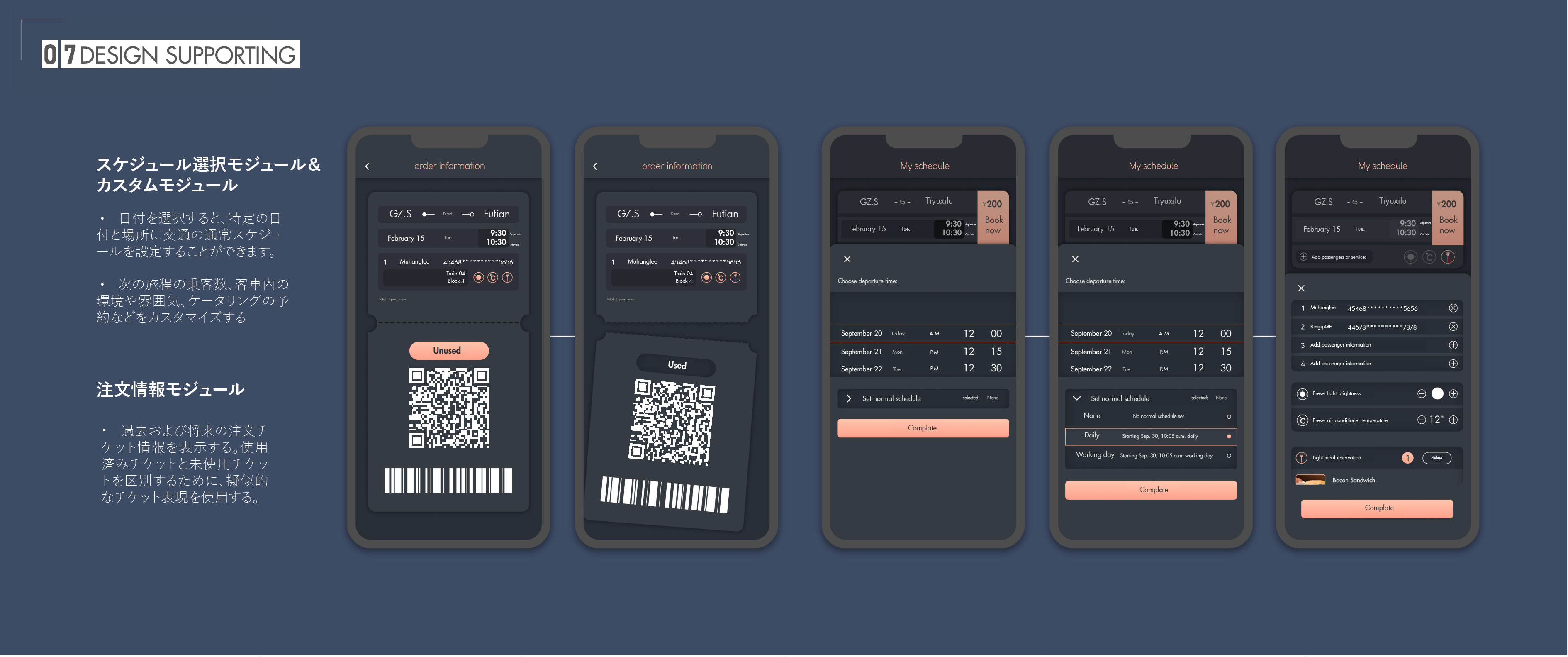
The app begins with a destination and fare estimate, then a departure time that can repeat daily or on weekdays. Passengers can add travel companions and set lighting, temperature and meal preferences before boarding. The electronic ticket uses an intact or torn form to show whether it has been used. These screens connect the recurring commute with the small details of the space waiting on board.