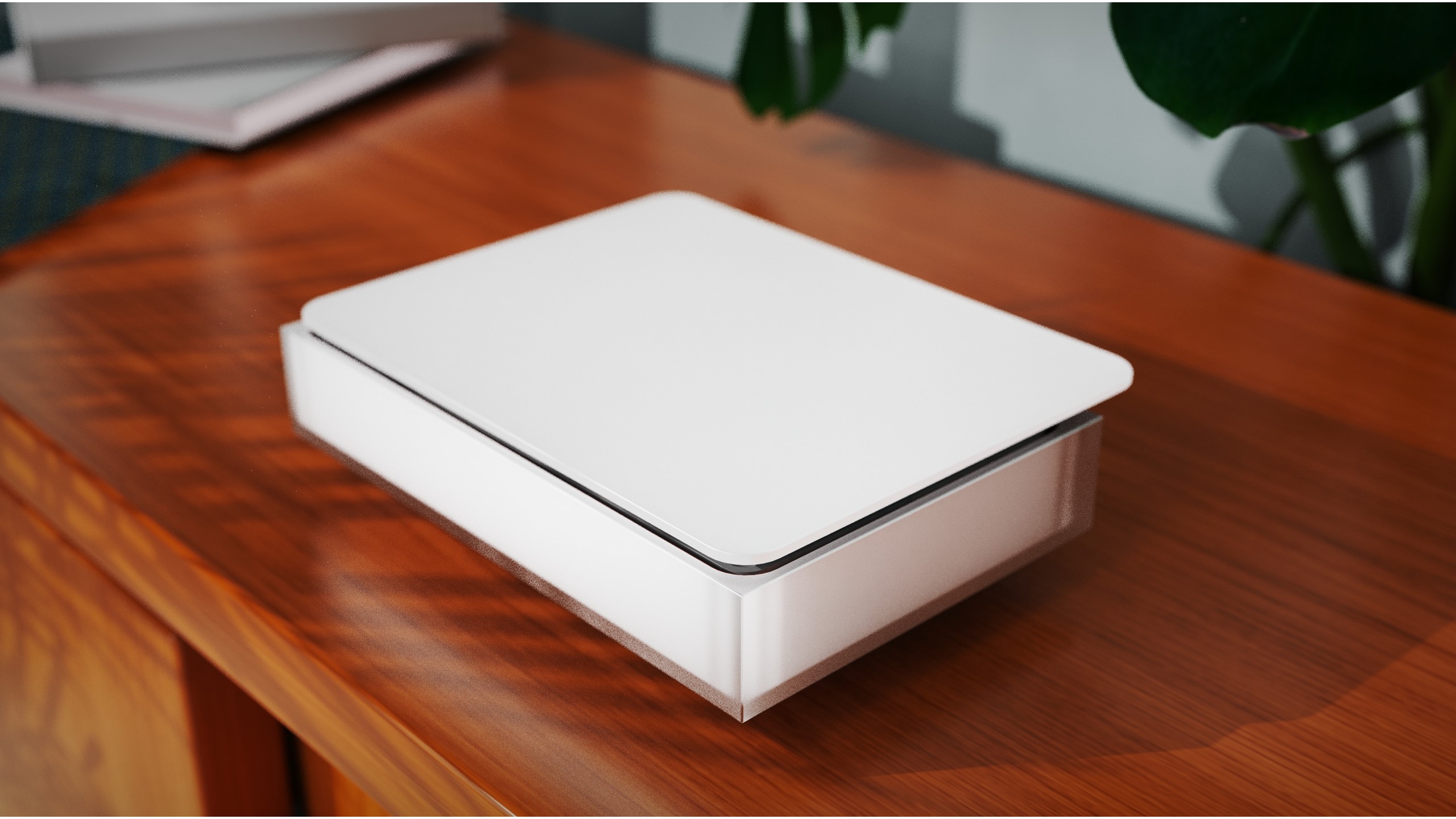
From a laboratory process to a home routine
Laurien grew from a research collaboration with Sugihara Lab at the University of Tokyo. I was responsible for prototype fabrication and product form design, translating the electrostatic recharging research into a device for home use. User profiles and a journey map helped me explore how it could fit into returning home, preparing a mask and leaving again.
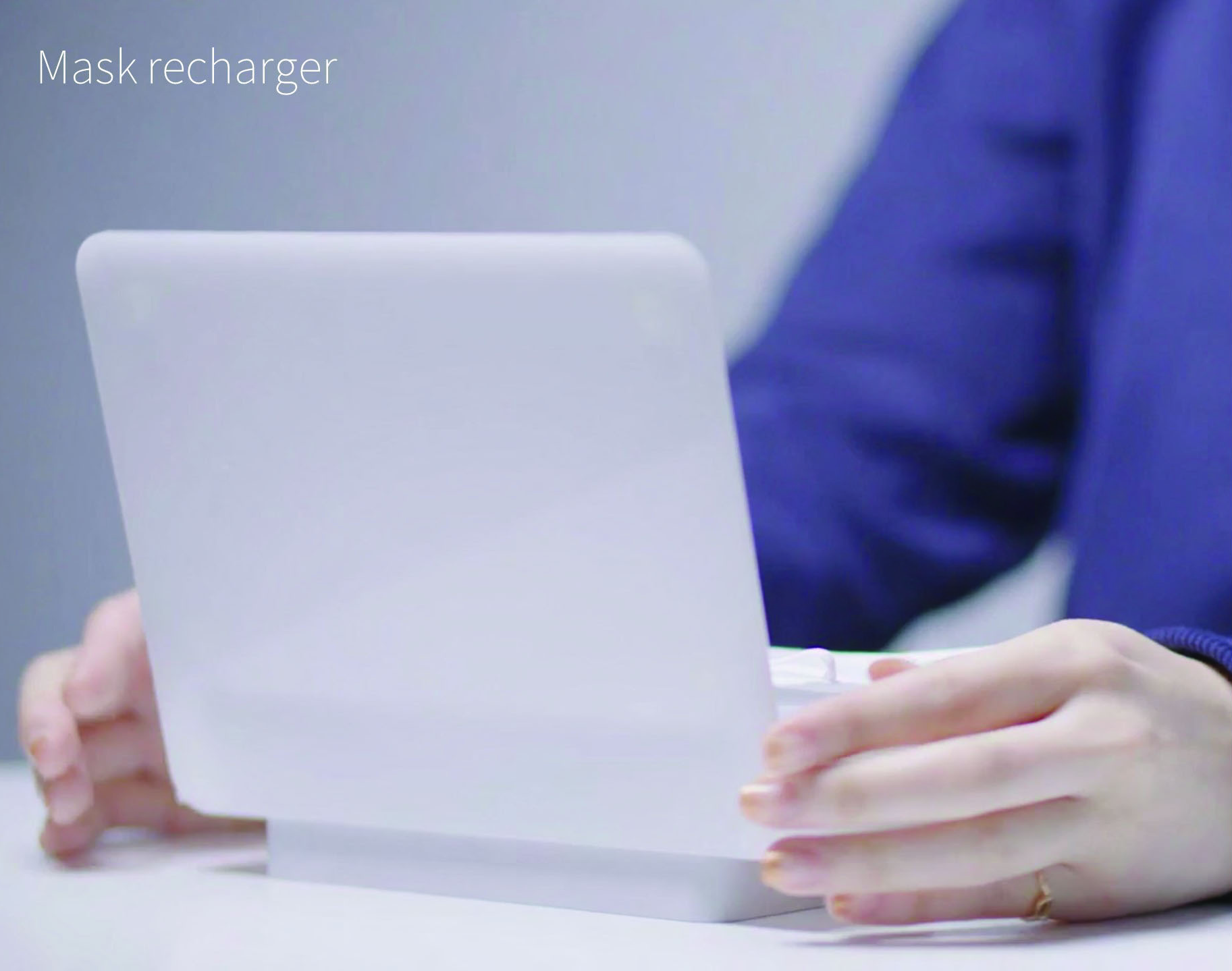
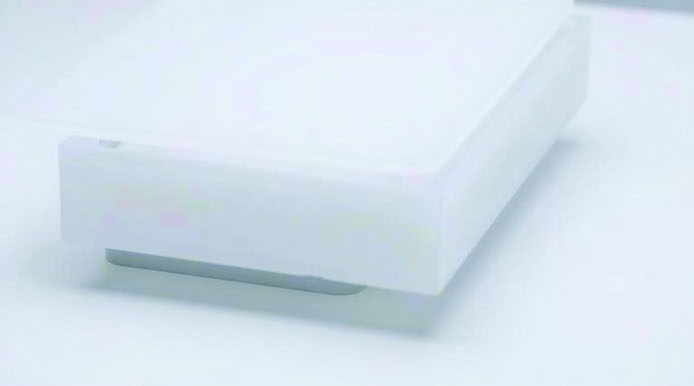
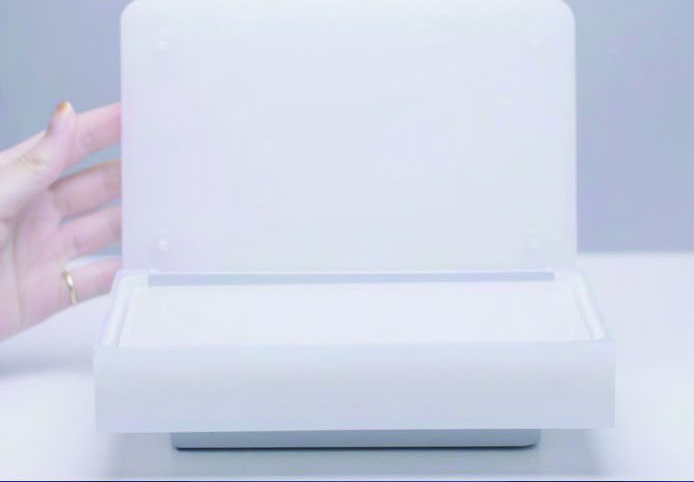
I developed the scale, form and materials around a shallow, accessible tray and a broad hinged lid. The domestic renders explore a compact object that can sit on a cabinet, while the physical prototypes examine handling and the charging structure.
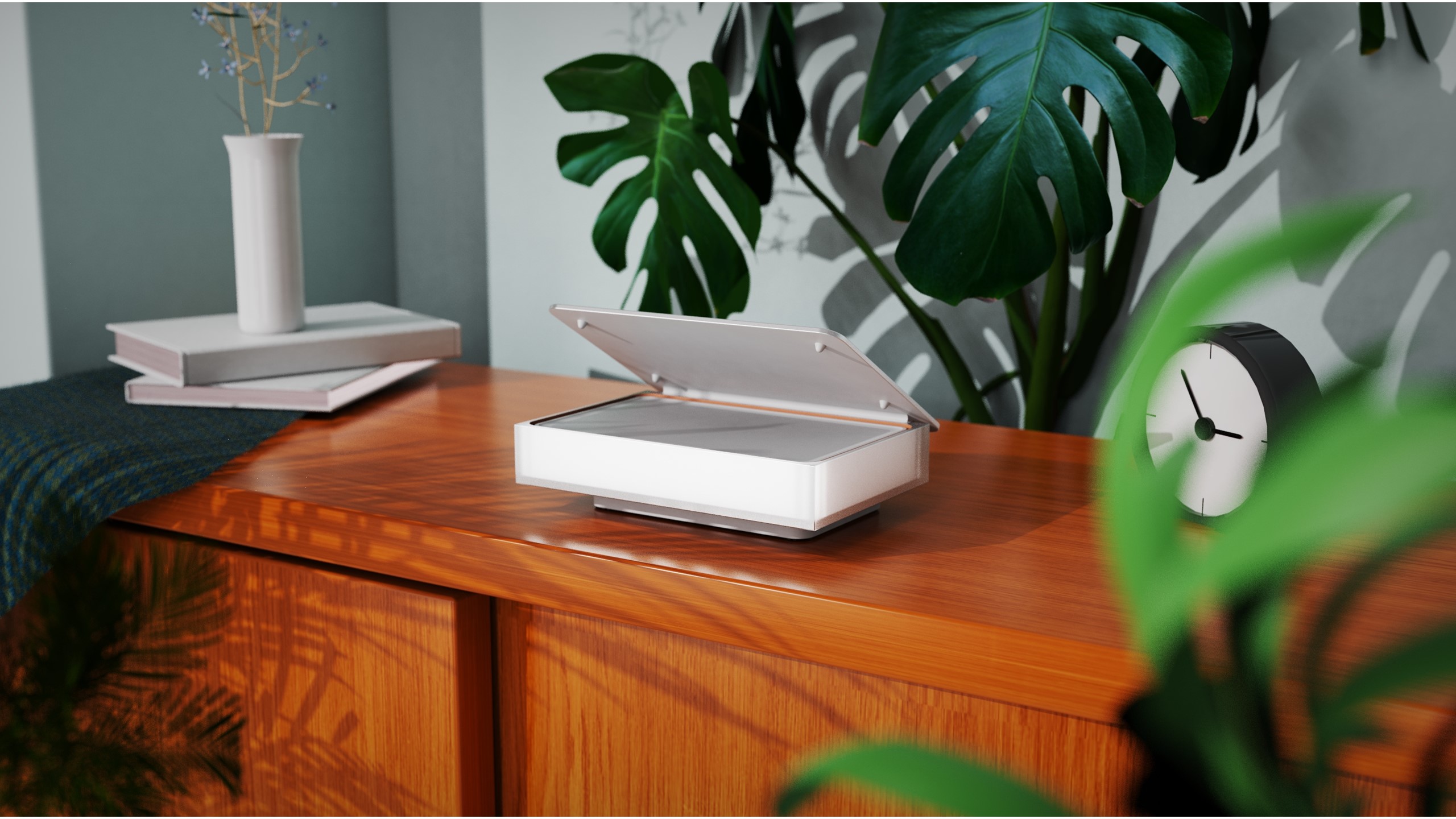
Four steps around one accessible tray
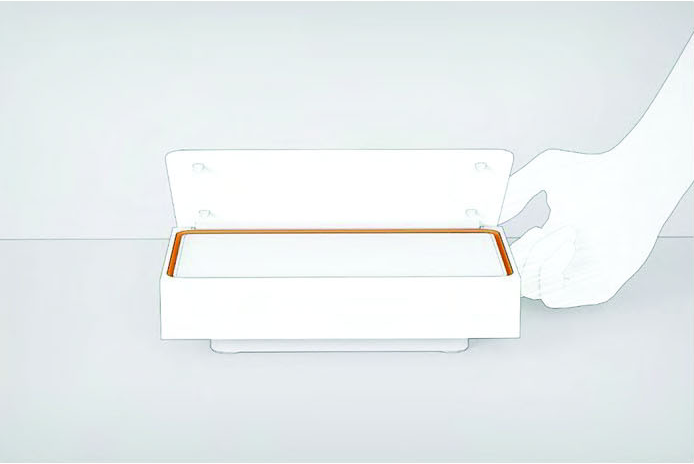
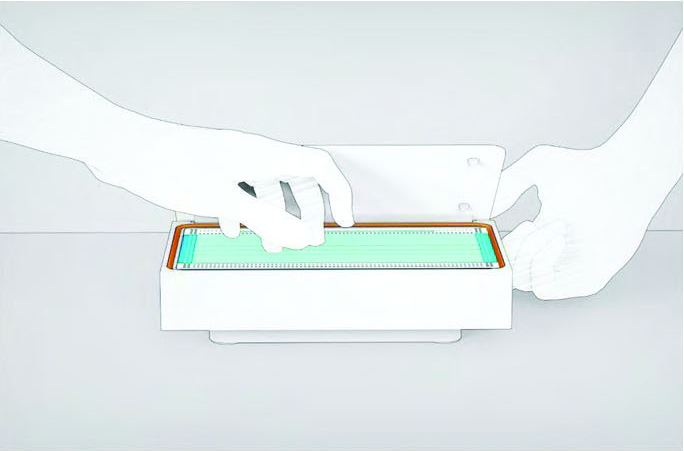
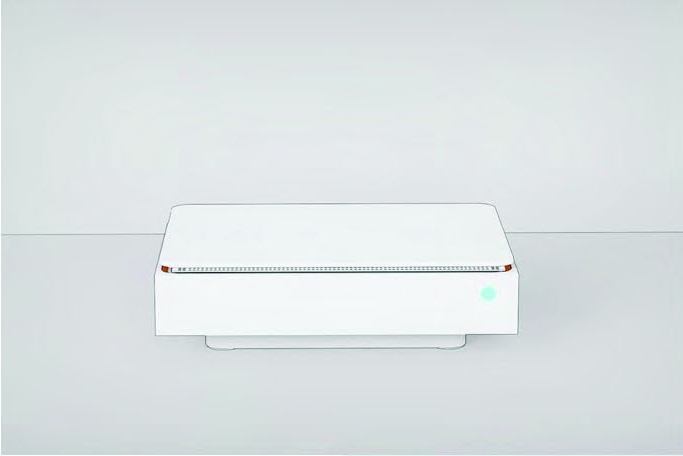
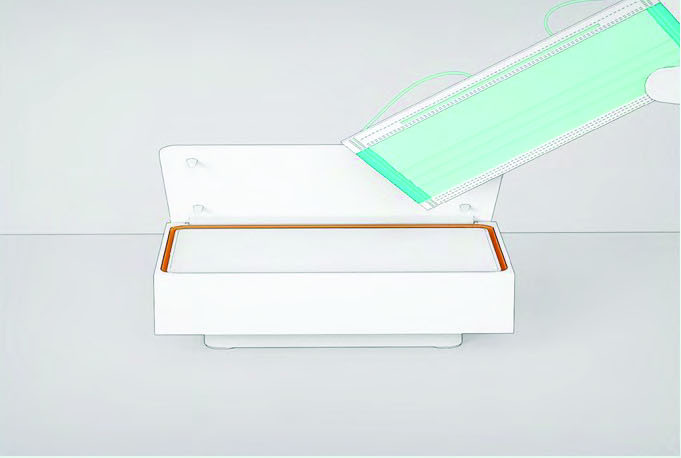
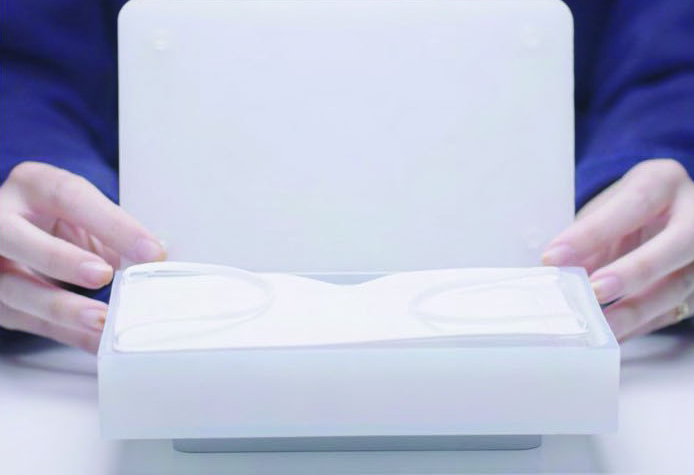
I kept the proposed interaction in a clear sequence: open the lid, place a prepared mask on the electrode module, close the lid and switch on, then collect the mask after charging. The broad opening makes placement and retrieval visible without reaching into a deep enclosure.
Prototyping the interaction
The physical prototypes let me work through the relationship between the lid, tray and the person using the device. These views show the closed form, access from above and the movement of placing a mask.
Separating the electrode from the enclosure
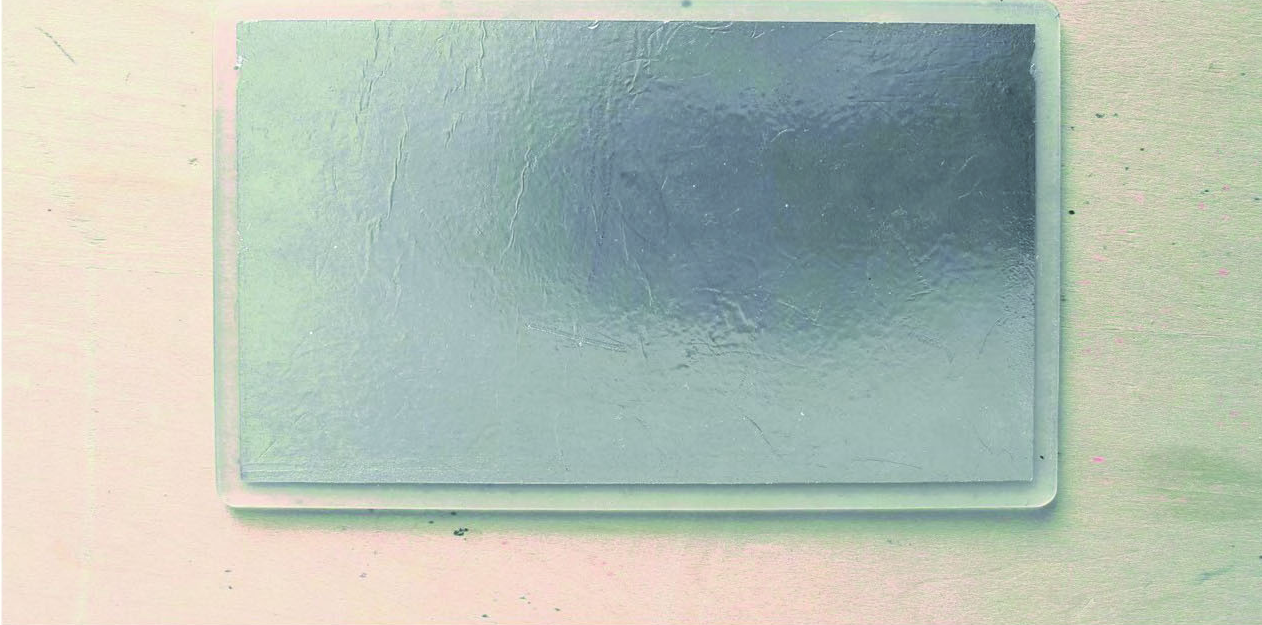
The charging behaviour shaped the internal construction. A metal layer distributes the voltage, while an insulating layer covers it. Separating the electrode from the housing helps retain charge rather than allowing it to drain through the surrounding structure.
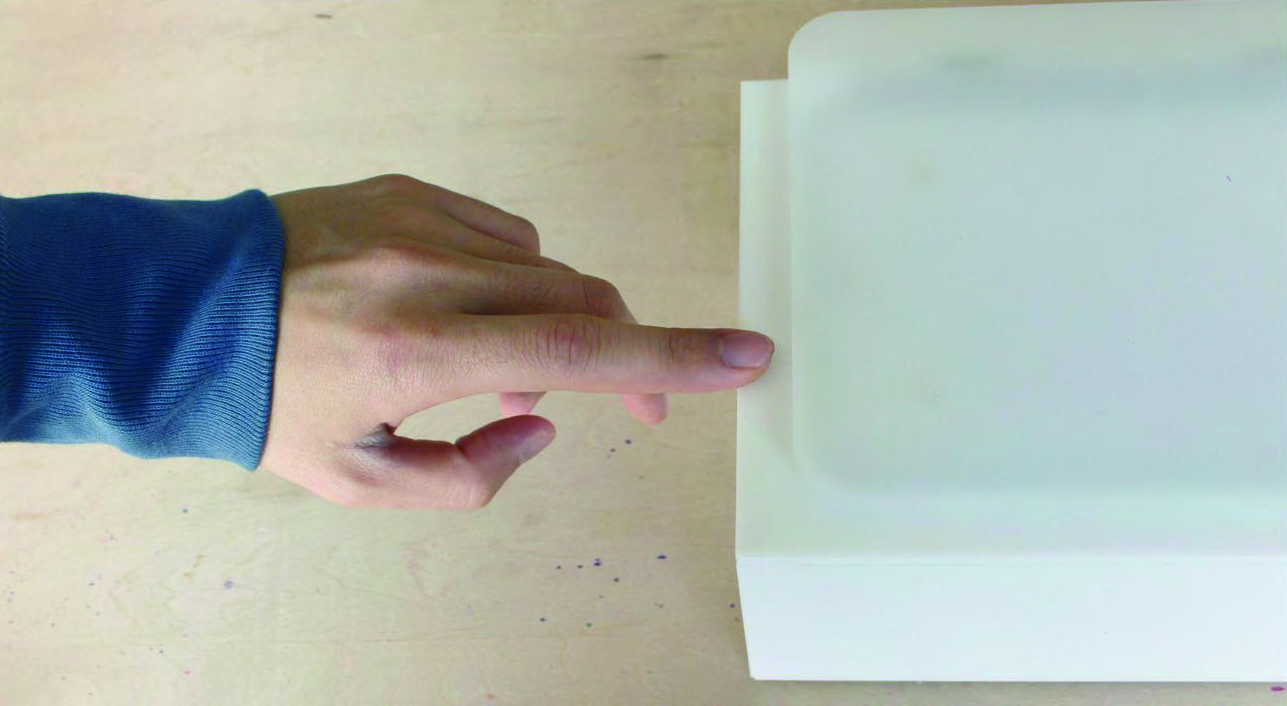
This relationship also informed the parts the user can touch. The enclosure keeps the charging components within the body, and the design includes power interruption when the lid opens. I developed these details together with the form and handling of the device.
Reducing charge loss at the lid
The lid needs to press the mask against the electrode, but contact with the lid can also provide a path for charge to escape. Small feet reduce that contact area while helping hold the mask in place. Polypropylene provides the insulating housing material.
Comparisons of electrode and lid arrangements informed this development. The measured quantity in these studies was voltage retention, helping connect material and contact decisions to the charging structure.
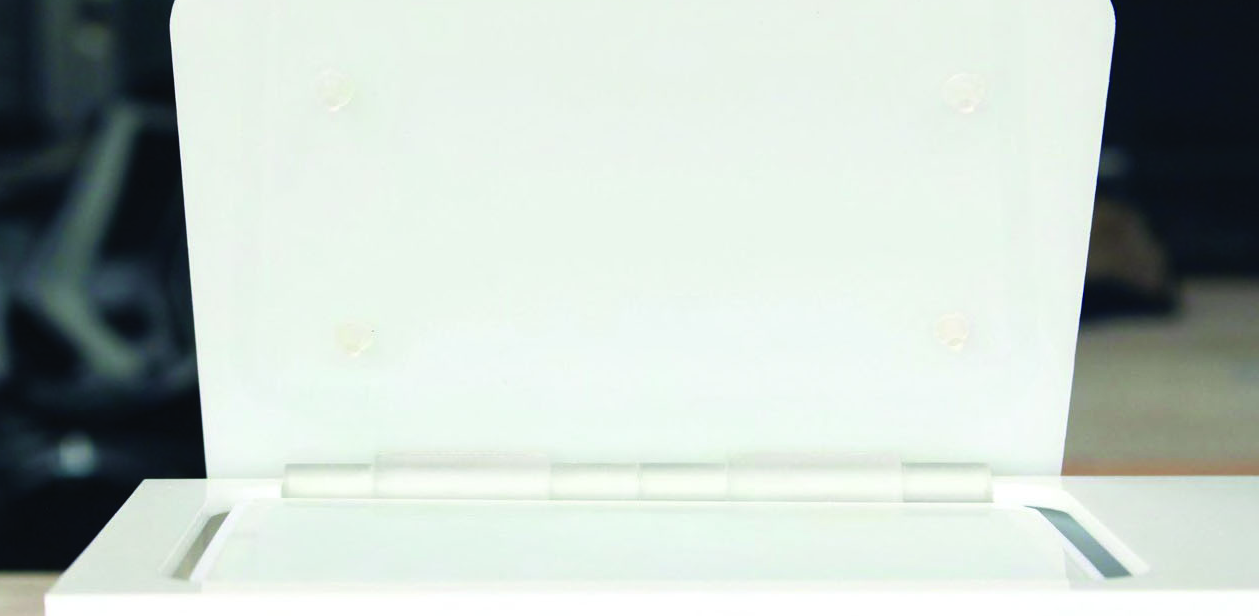
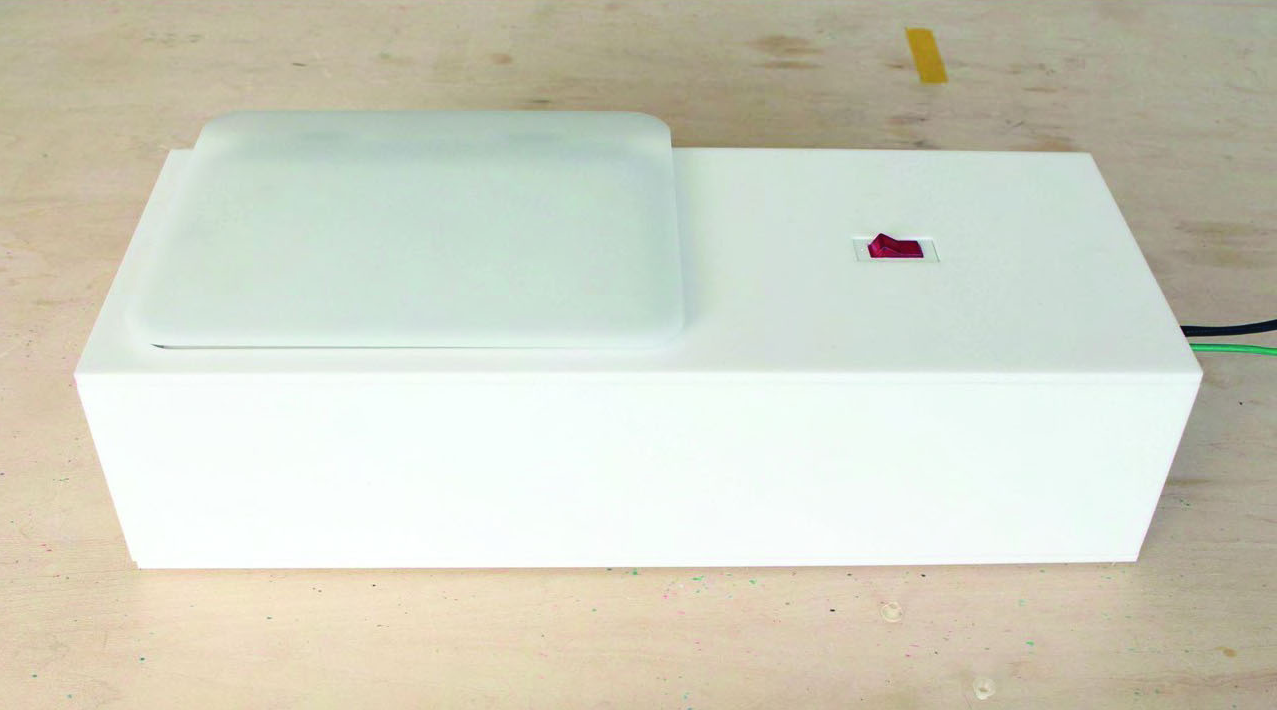
Laurien in use
Watch the household product film and the functional prototype demonstration.
Publication and press
I contributed to the experiments and co-authored Development of a desktop mask charger, published in Heliyon in 2023. The research was carried out at the University of Tokyo’s Institute of Industrial Science in collaboration with DLX Design Lab.
The university announcement and 2023 press reports introduce the desktop device. The ANN report below covers the earlier N95 recharging research from 2020, which preceded the Laurien household concept.
Heliyon · 7 April 2023
Development of a desktop mask charger. My contribution to this co-authored paper was experimental work.
The University of Tokyo · 26 April 2023
Institute of Industrial Science announcement of the desktop mask charger developed with DLX Design Lab.
PC Watch / Impress · 27 April 2023
The desktop prototype and research into electrostatic mask charging.
TV Asahi / ANN · 18 December 2020
Earlier N95 recharging research, before the desktop device and Laurien household concept.
Research collaboration between Sugihara Lab and DLX Design Lab at the Institute of Industrial Science, The University of Tokyo. My role was prototype fabrication and product form design. I also contributed to the experiments and co-authored Development of a desktop mask charger (Heliyon, 2023).